Living in Huntertown, Indiana | Moving to Huntertown Guide
Community Spotlight
Living in Huntertown, Indiana: What to Know Before You Move

One of Northeast Indiana's fastest-changing communities, with Northwest Allen County Schools, substantial newer housing, trails and parks, and Fort Wayne practically next door.
By Nate Hicks • Hicks Team Real Estate
Quick Answer: What is it like to live in Huntertown, Indiana?
Huntertown is a growing town in northern Allen County, just north of Fort Wayne. The 2020 Census counted 9,141 residents, nearly twice its 2010 population of 4,810. Huntertown is part of Northwest Allen County Schools and combines an older small-town core with extensive newer residential development, a 27-acre community-built family park, access to the Pufferbelly Trail network, municipal utilities, and a very short drive into Fort Wayne.
That's the short version.
The longer version is that Huntertown is probably one of the harder Northeast Indiana communities to describe with the phrase "small town."
Technically, it is one.
Parts of Huntertown still feel like one.
But if you haven't been through the area in a while, the amount of residential growth may surprise you.
Drive around the older part of town and you'll still find established streets, older houses, the water tower, local businesses, and pieces of the community that have been there for generations.
Then drive a few minutes in another direction.
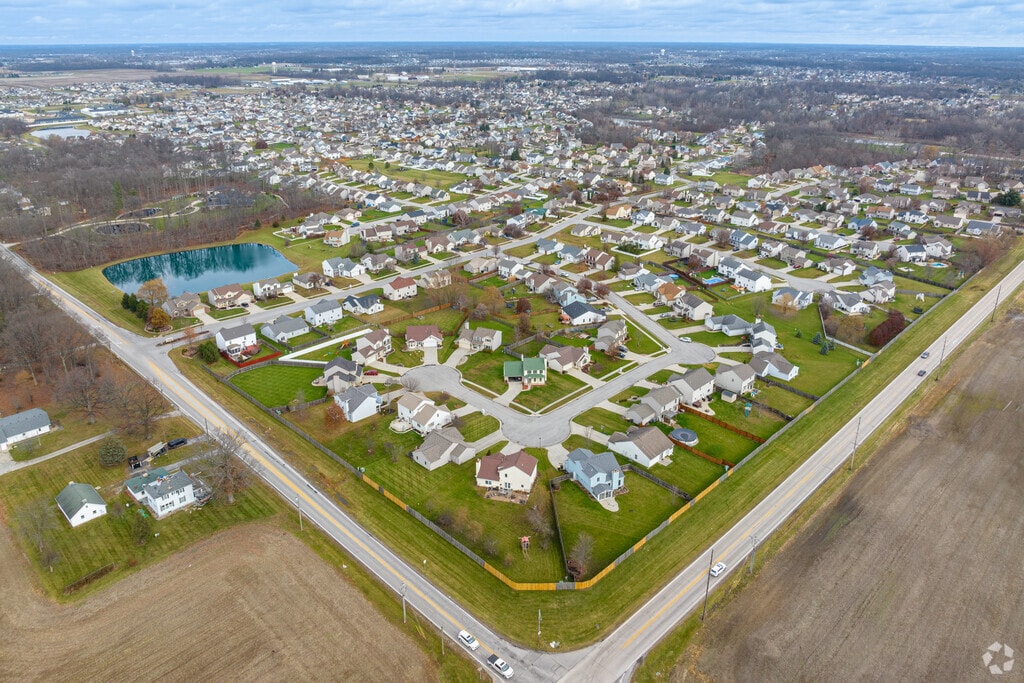
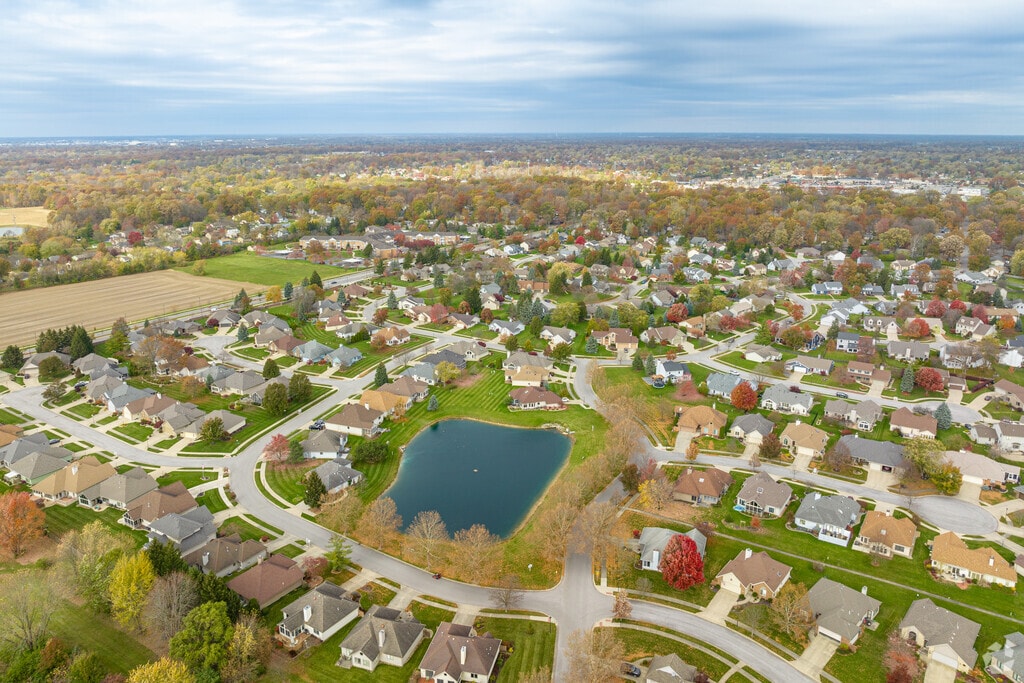
Suddenly you're surrounded by subdivisions, newer homes, construction equipment, retention ponds, fresh sidewalks, and streets that didn't exist all that long ago.
Keep going south and the line between Huntertown and northern Fort Wayne starts feeling increasingly theoretical.
That's really the Huntertown story right now. It's a town with an older identity that has become part of one of the busiest growth areas in Northeast Indiana.
Where Is Huntertown, Indiana?
Huntertown is located in northern Allen County, immediately north of Fort Wayne.
Lima Road provides one of the primary north-south connections through the area, while roads such as Gump, Carroll, Hathaway, Shoaff, Cedar Canyons, and Coldwater connect Huntertown with the rapidly developing areas north of Fort Wayne.
Depending on exactly where you start and where you're headed, the drive from Huntertown into Fort Wayne can be around 9 to 10 miles. North-side Fort Wayne destinations may be considerably closer than that.
That's an important distinction.
When somebody says they're "moving outside Fort Wayne," Huntertown doesn't mean the same thing as moving to a more distant small town.
You're not very far outside Fort Wayne at all. In a lot of ways, Huntertown functions as both its own town and part of the broader north Fort Wayne area.
Huntertown, Indiana at a Glance
County: Allen County
ZIP Code: 46748
2020 Census Population: 9,141
2010 Census Population: 4,810
School Corporation: Northwest Allen County Schools
High School: Carroll High School
Elementary School in Town: Huntertown Elementary School
Distance to Fort Wayne: Roughly 9 to 10 miles by road, depending on destination
Major North-South Corridor: Lima Road
Major Recreation Area: Huntertown Family Park
Trail Access: Pufferbelly Trail and connected trail routes
Annual Community Event: Huntertown Heritage Days
Municipal Services: Huntertown water and wastewater utilities
Huntertown Is Growing Fast
There are places where people talk about growth because a new subdivision went in.
Huntertown is on a different scale.
The Census population nearly doubled between 2010 and 2020.
That doesn't happen without changing the way a town feels.
And you can see it.
Newer neighborhoods spread well beyond the older core. Residential construction has filled areas that were agricultural not all that long ago. Roads and utilities have had to expand. Schools have grown. New businesses follow the rooftops.
If you're considering buying in Huntertown, you're not just choosing what the community looks like today. In some parts of town, you're buying into an area that may continue changing around you.
What Does Living in Huntertown Feel Like?
That depends heavily on which Huntertown you're talking about.
The older part of town still has a traditional small-town feel.
There are older homes, smaller streets, mature trees, local businesses, and properties that predate the subdivision boom by many decades.
Then you have newer Huntertown.
Larger subdivisions.
Sidewalks.
Neighborhood entrances.
Retention ponds.
Cul-de-sacs.
Homes built within the last few years.
And plenty more development nearby.
Then you get outside the incorporated town or farther into northern Allen County and the landscape can become rural again.
Acreage.
Farm ground.
Woods.
Pole buildings.
Private utilities in some areas.
So when somebody tells me they want a Huntertown house, there are a few questions behind that request. Do you want old Huntertown? Newer Huntertown? A subdivision? A larger lot? Something rural? Something close to Carroll High School? Something that makes the Fort Wayne commute as short as possible? Those searches overlap geographically. They can feel completely different once you're standing in the driveway.
Huntertown Is Not the Tiny Town It Used to Be
This is probably the biggest misconception people can have about Huntertown.
If your mental picture comes from twenty or thirty years ago, update it.
The 2010 Census population was 4,810.
By 2020, it was 9,141.
That's real growth.
At the same time, Huntertown hasn't completely lost the bones of the older town underneath it.
That's part of what makes the community interesting. You can drive past a newer subdivision with hundreds of homes and be back near an older house, farm field, or traditional small-town street a few minutes later. Huntertown is still in that transition.
Northwest Allen County Schools Are a Major Part of the Huntertown Conversation
If you're looking at homes in Huntertown, Northwest Allen County Schools will probably come up pretty quickly.
The district includes multiple elementary schools, middle schools, and Carroll High School. Huntertown Elementary School is located in town on Lima Road.
One thing that's important to understand is that the school corporation covers a much larger area than the Town of Huntertown itself.
A Huntertown mailing address does not automatically mean every student attends Huntertown Elementary.
Likewise, plenty of NACS properties have Fort Wayne mailing addresses.
If a particular elementary or middle school matters to your decision, verify the property directly with Northwest Allen County Schools. The district matters, but the individual address still matters too.
Huntertown Family Park Is a Little Different
Huntertown Family Park is one of my favorite things to point out because the story behind it is almost as interesting as the park itself.
The park covers about 27 acres and includes trails, playgrounds, a dog park, amphitheater, pickleball, open space, and a DNR-designated wetland.
But here's the unusual part.
It isn't a town-owned park.
Huntertown Family Park is a nonprofit organization supported by donations, grants, fundraising, local businesses, and volunteers.
That's pretty cool.
A community wanted a park.
So people built one.
And they're still building it. The park continues planning additional improvements, including trail work, parking, recreation additions, and other projects. For someone evaluating Huntertown as a place to live, the park is useful. The way it came together tells you something about the community too.
The Pufferbelly Trail Connects Huntertown With the Larger Trail Network
Huntertown also has access to one of the more important trail corridors in Northeast Indiana.
The Pufferbelly Trail extends north from Fort Wayne and connects toward Huntertown, with trail routes continuing west into town from the Gump Road area.
The bigger plan is even more ambitious.
The Pufferbelly is part of the planned Poka-Bache Connector, a regional trail route designed to connect Pokagon State Park in Steuben County with Ouabache State Park in Wells County.
That means Huntertown isn't just getting a neighborhood walking path. It's connected into a much larger regional trail system. If you bike, run, or walk regularly, that can be a meaningful quality-of-life feature.
Huntertown Heritage Days
Huntertown Heritage Days is the community's annual hometown festival.
The event includes a parade, 5K, historic trolley tours, cruise-in, night market, community competitions, and other activities centered around Huntertown Family Park and the community.
This is another area where old Huntertown and new Huntertown meet.
The community may have thousands more residents than it did twenty years ago, but there's still an effort to preserve a distinct local identity. That's going to become increasingly important as development fills in around it.
Huntertown Is Trying to Keep a Town Center
This is one of the more interesting parts of Huntertown's growth.
It's easy for a rapidly developing community to become nothing but subdivisions connected by busy roads.
Huntertown seems pretty aware of that risk.
The town has completed planning work around how the Lima Road area can function more like an identifiable community center, with ideas involving pedestrian space, trails and sidewalks, public spaces, lighting, landscaping, signage, and other streetscape improvements.
That's planning, not a promise that every concept will be built exactly as drawn. But the intent matters. Huntertown knows it's growing. The challenge is making sure it still feels like Huntertown when the next few thousand people arrive.
What Types of Homes Are in Huntertown, Indiana?
Huntertown has one of the broader housing mixes among the communities we've covered, but newer homes are a much bigger part of the story here.
There are older homes near the traditional town center.
There are ranches and established residential streets.
There are homes from several decades of suburban growth.
Then there are a lot of newer subdivisions.
Depending on where you're looking, that can mean homes built within the last five, ten, or fifteen years, newer infrastructure, neighborhood sidewalks, modern floor plans, open-concept living areas, attached garages, and planned residential development.
And then there are rural Huntertown properties. Those may have acreage, larger outbuildings, woods, farm ground nearby, septic systems, wells, and a completely different feel from a subdivision home. This is why I wouldn't think of "Huntertown real estate" as one category. It isn't.
New Construction Is a Much Bigger Part of Huntertown Than Some Nearby Towns
If your home search includes new construction, Huntertown is naturally going to come up.
There has been extensive residential development in the area, and new subdivisions, annexations, planned residential projects, and infrastructure work continue to shape the community.
In Huntertown, newer housing is part of the identity.
But new doesn't mean you stop asking questions.
Which builder?
What's included?
What's an upgrade?
How does the lot drain?
What's behind the property?
Is another phase planned?
What are the subdivision restrictions?
Is there an HOA?
A brand-new house can still be the wrong house. You just inspect it differently.
Pay Attention to What Is Planned Around the Neighborhood
This matters more in Huntertown than it does in a place where very little new construction is happening.
That empty field behind the subdivision may stay a field.
Or it may become another subdivision.
Or apartments.
Or commercial development.
Or a road.
Huntertown has active residential development, annexation activity, and long-term planning related to future growth.
If the open view behind the house is one of the reasons you love it, don't assume the cornfield is part of the purchase. Look at zoning, plats, and nearby development plans. I'd rather find out what's possible before you buy than six months afterward when the survey stakes show up.
What About Older Homes in Huntertown?
Older Huntertown can be a very different search.
These homes may have mature trees, larger or less standardized lots, established streets, detached garages, additions from different eras, and a little more architectural variety than you'll typically find in a newer subdivision.
They can also come with older-house questions.
Roof.
Windows.
Electrical.
Plumbing.
HVAC.
Foundation.
Sewer line.
Previous renovations.
None of that is an argument against buying older. A well-maintained older home can be an excellent property. And a brand-new home can still have defects. The goal is to understand what you're buying instead of assuming age gives you the answer.
Rural Huntertown Is Different Again
One of the interesting things about Huntertown is how quickly the area can transition from suburban development to countryside.
Depending on the property, rural Huntertown can mean acreage, woods, agricultural land, pole buildings, private utilities, drainage considerations, easements, and a very different ownership experience.
A mailing address that says Huntertown doesn't guarantee you're inside the town limits or connected to Huntertown utilities.
That distinction matters, especially when you're comparing houses that look similar online. A subdivision property and a five-acre property may both be in the same ZIP code. That's about where the similarities stop.
What Utilities Does Huntertown Have?
Huntertown operates municipal water and wastewater systems and continues investing in both as the community grows.
That does not mean every property with a Huntertown mailing address receives town water and sewer.
Outside the service area, utilities can vary.
If you're looking at a property near the edge of town or in the surrounding county, verify the actual providers and systems serving the house. Don't assume.
Is Huntertown a Good Option If You Work in Fort Wayne?
For a lot of people, this is Huntertown's biggest practical advantage.
You're close.
Very close compared with most of the other small towns around Northeast Indiana.
Route estimates put Huntertown roughly 9 miles from Fort Wayne, but that number doesn't tell the entire story because many major north-side destinations are between Huntertown and downtown Fort Wayne.
If you work around Dupont Road, Parkview Regional Medical Center, Lima Road, Coldwater Road, or another north-side employment area, your commute may feel more like suburban Fort Wayne than an out-of-town commute.
If you're headed to southwest Fort Wayne, that's obviously different.
Drive the commute at the time you'd actually go to work, then drive home when you'd normally come back. Don't test it at 2:00 on Sunday afternoon and declare victory.
Huntertown and Fort Wayne Are Growing Toward Each Other
This may be the most important way Huntertown differs from more distant Northeast Indiana communities.
Fort Wayne's northern development already extends far toward Huntertown.
Commercial development around Dupont, Lima, Coldwater, Union Chapel, and the surrounding northern corridors has filled in much of the space that once made Huntertown feel farther away.
Huntertown has also expanded.
The result is that the distinction between "living in Huntertown" and "living on the north side of Fort Wayne" can feel smaller than the municipal boundary suggests.
Shopping is close.
Restaurants are close.
Healthcare is close.
Employers are close.
I-69 is close.
But it also means Huntertown doesn't offer the same degree of separation from Fort Wayne that some smaller towns do. If what you want is to leave the city behind completely, that's worth considering.
Shopping, Restaurants, Healthcare, and Everyday Errands
This is another area where Huntertown's location matters more than what sits inside the town limits.
Huntertown itself has local businesses and services.
But you don't have to drive far south before you're into extensive commercial development along Lima Road, Dupont Road, Coldwater Road, and the north Fort Wayne area.
That gives Huntertown access to grocery stores, restaurants, pharmacies, healthcare, retail, home-improvement stores, entertainment, and professional services without requiring a long trip.
It's one of the reasons Huntertown feels different from communities with similar or even larger populations farther from Fort Wayne. You can have a Huntertown address while using Fort Wayne amenities as part of your normal daily routine.
What Should Homebuyers Know About Huntertown Real Estate?
The biggest thing is that Huntertown is changing.
That should influence how you evaluate a property.
Don't only look at the house.
What's being built nearby?
What land is still undeveloped?
Where are the roads going?
Which utility serves the property?
Is it actually inside Huntertown?
Which school is assigned?
Is the neighborhood complete?
Is another phase coming?
Does the subdivision have restrictions or an HOA?
What's planned behind the backyard?
Those questions matter in a rapidly growing area.
And then you still have the normal house questions.
Condition.
Age.
Lot.
Drainage.
Roof.
Mechanical systems.
Garage.
Updates.
Comparable sales.
Future maintenance.
The house is one piece of the decision. In Huntertown, the surrounding growth can be another big piece.
Is Huntertown the Right Place for You?
Huntertown can make a lot of sense for someone who wants newer housing, Northwest Allen County Schools, parks and trails, and a location very close to Fort Wayne.
You can still find parts of the older town.
You can find extensive newer subdivisions.
You can find rural properties around the edges.
Huntertown Family Park gives the community a substantial outdoor gathering space.
The Pufferbelly Trail connects the area with a much larger regional network.
Fort Wayne's north-side shopping, healthcare, restaurants, and employers are nearby.
And the town continues investing in the infrastructure needed to support growth.
But the growth itself is part of the decision.
If you want a quiet little town that is likely to look almost exactly the same ten years from now, Huntertown probably isn't the first place I'd point you.
If you like being in an area that's growing and you want easy access to Fort Wayne without living farther into the city, that's a different story.
The better question isn't whether Huntertown is a good place to live. It's whether the Huntertown that's developing right now fits what you're looking for.
Frequently Asked Questions About Living in Huntertown, Indiana
How big is Huntertown, Indiana?
Huntertown had 9,141 residents in the 2020 U.S. Census, up from 4,810 in 2010.
What county is Huntertown in?
Huntertown is located in Allen County, Indiana, immediately north of Fort Wayne.
How far is Huntertown from Fort Wayne?
Huntertown is roughly 9 to 10 miles from Fort Wayne by road, depending on the exact starting point and destination. Many north-side Fort Wayne destinations are closer than downtown.
What school district serves Huntertown?
Huntertown is served by Northwest Allen County Schools, which includes Carroll High School and multiple elementary and middle schools. Huntertown Elementary School is located in town.
Does every Huntertown address attend Huntertown Elementary?
No. Northwest Allen County Schools covers a larger area than the Town of Huntertown, so school assignments depend on the individual property. Always verify the current assignment directly with NACS.
Is Huntertown growing?
Yes. Huntertown's Census population increased from 4,810 in 2010 to 9,141 in 2020, and residential development has continued throughout the area.
What is Huntertown Family Park?
Huntertown Family Park is a roughly 27-acre nonprofit community park with playgrounds, trails, a dog park, amphitheater, wetland area, pickleball, and other recreational space.
Does Huntertown connect to the Pufferbelly Trail?
Yes. Trail routes connect Huntertown with the Pufferbelly corridor and the larger Fort Wayne trail network.
What is Huntertown Heritage Days?
Huntertown Heritage Days is an annual community celebration with events such as a parade, 5K, cruise-in, historic trolley tours, market activities, and other community events.
Does Huntertown have city water and sewer?
Huntertown operates municipal water and wastewater utilities. Properties outside the town's service area may have different utility arrangements, so service should be verified for each property.
Are there newer homes in Huntertown?
Yes. Newer construction and subdivision development make up a significant part of Huntertown's housing market, although older homes, established neighborhoods, and rural properties are also available.
Is Huntertown close enough to commute to Fort Wayne?
For many people, yes. Huntertown sits immediately north of Fort Wayne, and the drive can be particularly convenient for people working on the city's north or northwest sides.
Is Huntertown considered part of Fort Wayne?
No. Huntertown is an incorporated town with its own local government. However, its proximity to Fort Wayne and the amount of development between the two communities means the areas can feel closely connected.
What is Huntertown's ZIP code?
Huntertown's ZIP code is 46748.
Thinking About Moving to Huntertown, Indiana?
If Huntertown is on your list, I would spend more time driving around here than I might in some smaller communities.
Not because Huntertown is complicated.
Because it changes so much from one area to another.
Start around the older part of town.
Drive past Huntertown Elementary.
Go through Huntertown Family Park.
Find the Pufferbelly connection.
Then start driving through the newer neighborhoods.
Don't stop with one subdivision.
Look at a few.
Then drive south toward Fort Wayne.
See how quickly you reach the places you'd actually use.
Drive to work.
Drive to the grocery store.
Drive to healthcare.
Then go the other direction.
Head toward the rural edges of Huntertown and see how quickly the landscape changes.
And pay attention to the empty land between everything.
Some of it may stay open. Some of it may not. Huntertown is a place where understanding what could be there tomorrow can matter almost as much as understanding what's there today.
Buying a Home in Huntertown, Indiana
If you're looking at homes for sale in Huntertown, I wouldn't start by asking whether Huntertown is right for you.
I'd start by asking which Huntertown is right for you.
Older town?
Newer subdivision?
Rural acreage?
Closer to Fort Wayne?
Closer to the schools?
Town utilities or private systems?
Established neighborhood or active construction nearby?
Once we narrow that down, the houses start making a lot more sense.
Then we can look at condition, pricing, comparable sales, lot, builder, subdivision restrictions, utilities, future development, drainage, upgrades, and everything else that affects the property itself. The address is only the beginning.
Selling a Home in Huntertown, Indiana
Huntertown's growth can also make pricing a home more complicated than it initially appears.
A newer subdivision may have direct competition from both resale homes and new construction.
An older Huntertown property may need a different set of comparable sales entirely.
A rural property may have very little in common with either one.
So pricing starts with figuring out what buyers will actually compare your home with. Then we look at the relevant recent sales, current listings, new-construction competition, lot, location, upgrades, condition, and anything unique about the property.
Know someone considering Huntertown?
Share this guide with them. Understanding how Huntertown is growing is just as important as understanding the house.
Have Questions About Huntertown Real Estate?
If you're thinking about buying, selling, or moving to Huntertown, I'm happy to help you work through the details.
The part of town, the property, your commute, schools, utilities, future development, and what you want your normal week to look like all matter. Sometimes finding the right house starts with figuring out which version of the community actually fits you.
Contact Hicks Team Real EstateCategories
Recent Posts