Living in Grabill, Indiana | Moving to Grabill Guide
Community Spotlight
Living in Grabill, Indiana: What to Know Before You Move
A genuinely small Northeast Indiana town, Amish-country surroundings, local shops, community parks, East Allen County Schools, an annual fair that temporarily makes the town much less small, and Fort Wayne close enough to remain part of everyday life.
By Nate Hicks • Hicks Team Real Estate
What Is It Like to Live in Grabill, Indiana?
Grabill is a small incorporated town in northeast Allen County surrounded by rural farmland and a large Amish community. The town itself has just over 1,100 residents, local businesses, parks, established neighborhoods, newer housing, and a recognizable Main Street. Fort Wayne, Leo-Cedarville, and Harlan are all close enough that living in Grabill feels rural and small-town without feeling cut off.
Grabill is actually small.
Not “small compared with Indianapolis.”
Small.
The 2020 Census counted 1,112 residents.
But that number can be misleading if you assume it means there is nothing here. Grabill has a real town center, businesses people travel to visit, two parks, local employers, community events, and one of the more distinct identities of any small community around Fort Wayne.
Grabill at a Glance
County: Allen County
2020 Census Population: 1,112
Founded: 1902
School Corporation: East Allen County Schools
Major Local Roads: Grabill Road, Main Street, Schwartz Road, and nearby State Road 1 and State Road 37
Nearby Communities: Leo-Cedarville, Harlan, Fort Wayne, and Spencerville
Parks: Jack R. Harris Park and Grabill Park
Housing: Older town homes, established subdivisions, later twentieth-century homes, newer construction, and rural properties surrounding town
Known For: Amish-country setting, local shops, handmade goods, small-town events, and the Grabill Country Fair
Grabill Started as a Railroad Town
Grabill was founded in 1902 and grew from a railroad depot into a small town with businesses, industry, homes, and community institutions of its own.
That history still shows in the layout around Main Street and Grabill Road.
This is not a modern residential development that later acquired a town name. The town existed first, and the surrounding residential growth came afterward.
The Amish Community Is Part of Everyday Life Here
Grabill sits in the middle of one of Northeast Indiana's larger Amish communities.
That is not just something designed for visitors.
Horse-drawn buggies use the surrounding roads.
Amish-owned farms and businesses are part of the local economy.
Produce stands, woodworking, baked goods, furniture, bulk foods, and other locally made products are normal parts of the area.
If you're moving here from somewhere without a large Amish population, one practical adjustment is simple: pay attention on rural roads. Coming around a curve behind a buggy at highway speed is a terrible way to discover local driving culture.
Grabill Itself Is Not an Amish Village
This distinction matters.
Grabill is an incorporated Indiana town with conventional homes, businesses, local government, parks, industry, paved streets, and normal municipal services.
The Amish community largely surrounds and interacts with the town.
So you can live in Grabill without living an Amish lifestyle. You will simply live in an area where that culture is much more visible than it is in most of Allen County.
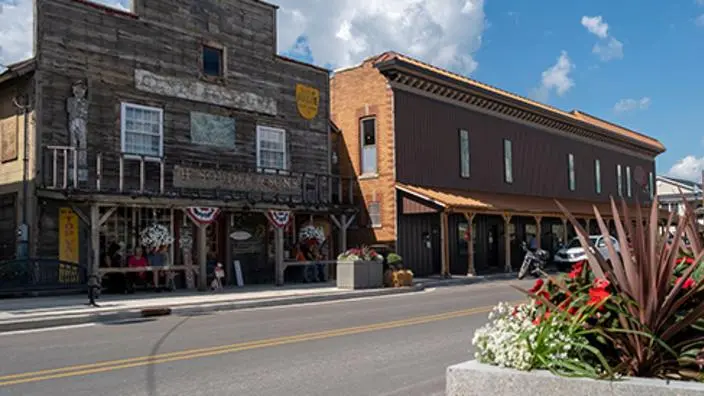
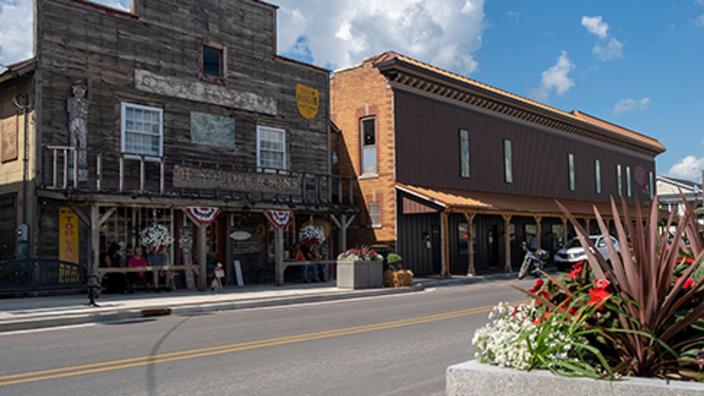
Main Street Has More Going On Than You Might Expect
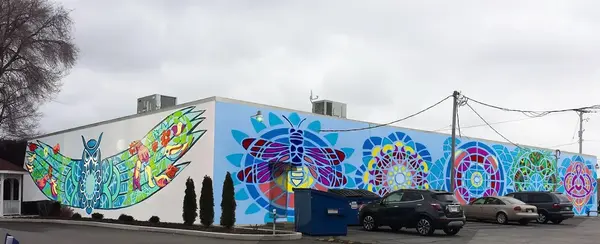
Grabill's commercial center is concentrated around Main Street and Grabill Road.
There are local shops, food, a hardware store, antiques, handmade goods, and businesses that draw customers from outside the town itself.
The Grabill Chamber of Commerce describes the community as having grown from its railroad beginnings into a mix of factories, shops, restaurants, and homes.
People Actually Travel Here to Shop
That's not something every town of roughly 1,100 people can say.
Grabill has become a destination for antiques, handmade goods, Amish-country products, food, furniture, and local shopping.
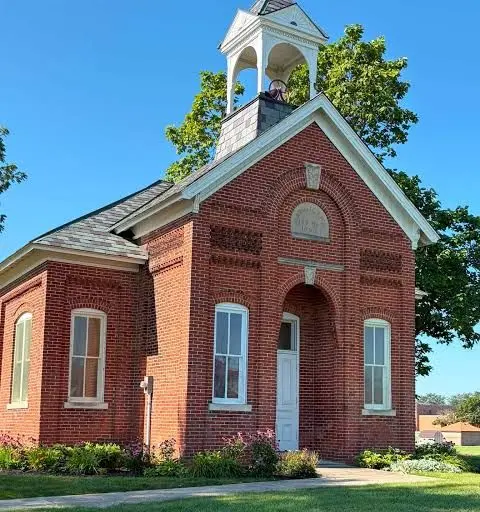
The Country Shoppes of Grabill, for example, occupies a historic downtown building and brings together a large collection of antique, vintage, craft, and specialty vendors.
Living here means those places are simply part of town rather than a Saturday destination.
The Grabill Country Fair Temporarily Changes the Size of the Town
Every September, the Grabill Country Fair takes over much of the community.
The fair began in 1973 and now attracts roughly 30,000 to 35,000 visitors over three days.
There are handmade craft booths, food, entertainment, old-fashioned contests, a parade, demonstrations, and other community activities.
Again, Grabill has around 1,100 residents.
So for one weekend, things get slightly busier.
Housing Spans More Eras Than the Town's Size Suggests
Homes closest to the original town center tend to be older.
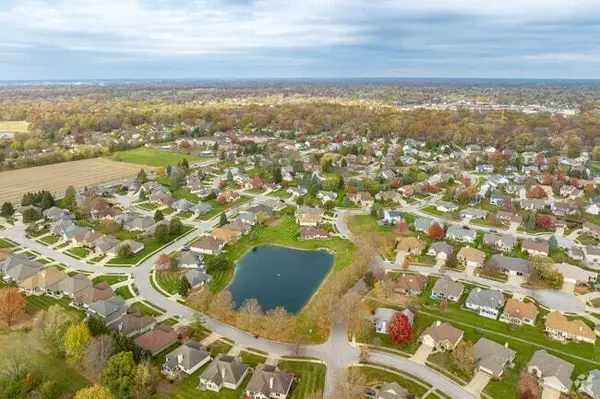
Move outward and you find neighborhoods developed later in the twentieth century.
There has also been newer residential development around the community.
And once you leave town limits, the housing picture changes quickly into farmhouses, acreage, rural properties, and homes where the utility conversation may look very different from a property inside town.
East Allen County Schools Serve Grabill
Grabill is within East Allen County Schools.
The district covers a large part of eastern Allen County, including Grabill, Leo-Cedarville, Harlan, Woodburn, New Haven, Hoagland, and Monroeville.
Because the district covers so much territory, verify the exact school assignment using the individual property address rather than assuming based only on a Grabill mailing address.
Grabill Has Two Town Parks
Grabill Park, often called South Park locally, is the older of the two.
Jack R. Harris Park, sometimes called North Park, was developed later and provides additional recreation space on the north side of town.
The nearby Leo-Grabill Sports Complex also supports organized youth baseball and softball.
For a community this small, local recreation is surprisingly well established.
Leo-Cedarville Is Close Enough to Feel Connected
Grabill and Leo-Cedarville are separate towns, but they are close enough that daily life overlaps.
Residents may use businesses, parks, schools, services, and community organizations in both areas.
If you're comparing the two, my guide to living in Leo-Cedarville is worth reading too. They are geographically close, but the day-to-day feel is not exactly the same.
Fort Wayne Is Close Enough to Remain Part of Your Week
Grabill sits northeast of Fort Wayne, with routes toward the city through State Road 1, State Road 37, Grabill Road, and the surrounding county-road network.
Visit Fort Wayne places Grabill about 18 miles from Downtown Fort Wayne.
That means Fort Wayne employment, shopping, healthcare, restaurants, and entertainment can still be part of normal life.
You are choosing a small-town home base, not moving beyond civilization.
The Commute Is More Rural Than the Mileage Suggests
This is something I would pay attention to if you're coming from another part of Fort Wayne.
Some of your drive may be two-lane roads.
You may encounter farm equipment.
You may encounter horse-drawn buggies.
Winter weather can also feel different on rural roads than it does on major Fort Wayne corridors.
Don't judge the commute from a map. Drive it when you'll actually be driving it.
Rural Properties Need a Different Checklist
A Grabill address does not automatically mean you are buying a house inside the town.
The surrounding countryside has many rural properties.
Well.
Septic.
Propane.
Drainage.
Outbuildings.
Driveway maintenance.
Road access.
Internet availability.
Those are property questions, not details to discover after you've already decided you love the barn.
Internet Service Deserves More Attention Than It Used To
If you work remotely, stream heavily, run a business from home, or simply have several people online at once, verify service at the exact address.
Internet availability can change quickly as you move between town, subdivision, and rural properties.
“They have internet in Grabill” is not the same answer as “this house can get the service I need.”
Is Grabill the Right Place for You?
Grabill tends to make sense for someone who genuinely wants small-town Northeast Indiana.
A real Main Street.
Local businesses.
Community parks.
Rural scenery.
Amish-country surroundings.
Leo-Cedarville nearby.
Fort Wayne still within reach.
If you need fifteen restaurant choices within five minutes and want everything open late, Grabill is probably not the assignment.
If you like the idea of knowing exactly where Main Street is, being surrounded by countryside, and driving into Fort Wayne when you want the bigger-city options, then it becomes much more interesting.
Frequently Asked Questions About Living in Grabill
Where is Grabill, Indiana?
Grabill is in northeast Allen County, northeast of Fort Wayne and just east of Leo-Cedarville.
How big is Grabill?
The 2020 Census counted 1,112 residents within the incorporated town.
Is Grabill an Amish town?
Grabill is an incorporated town located within a large Amish settlement. Amish farms, businesses, and horse-drawn transportation are common in the surrounding area, but Grabill itself includes conventional residential neighborhoods, businesses, parks, and local government.
What school district serves Grabill?
Grabill is within East Allen County Schools. Verify the exact school assignment for the individual property.
Is Grabill close to Fort Wayne?
Yes. Grabill is roughly 18 miles from Downtown Fort Wayne, although actual commute time depends on route, traffic, weather, and destination.
Does Grabill have parks?
Yes. Grabill has two town parks, Grabill Park and Jack R. Harris Park, along with the nearby Leo-Grabill Sports Complex.
What is the Grabill Country Fair?
The annual September fair features handmade crafts, food, demonstrations, entertainment, contests, and a parade and attracts tens of thousands of visitors over its three-day run.
Thinking About Moving to Grabill?
Start on Main Street.
Then drive the residential streets.
Go through Jack Harris Park.
Drive toward Leo-Cedarville.
Then drive the country roads outside town.
If you'll commute to Fort Wayne, make that drive too.
Grabill makes more sense once you understand how closely the little town, the surrounding countryside, Leo-Cedarville, and Fort Wayne all fit together.
Buying a Home in Grabill
The first question is whether you're buying inside town, in a subdivision near town, or on a rural property with a Grabill address.
Those are different purchases.
Utilities, road maintenance, well and septic systems, internet service, outbuildings, acreage, drainage, school assignment, and commute can all change as you move outward.
A Grabill address narrows the map. It does not finish the due diligence.
Selling a Home in Grabill
Pricing a Grabill property also depends heavily on what kind of property it is.
A house in town, a newer subdivision home, and a rural acreage property may attract completely different buyers even when they're only a few miles apart.
The marketing should explain the property, the setting, the utilities, the commute, and what living there actually looks like rather than relying only on “Grabill” in the address.
Know someone considering Grabill?
Share this guide with them. Grabill is genuinely small, but its connection to the surrounding countryside, Leo-Cedarville, and Fort Wayne makes it much more practical than the population number alone suggests.
Have Questions About Grabill Real Estate?
If you're thinking about buying, selling, or moving to Grabill, I can help you compare homes in town, nearby subdivisions, and rural properties and sort through the details that change from one property to the next.
Contact Hicks Team Real EstateCategories
Recent Posts