Living in West Central Fort Wayne, Indiana | Neighborhood Guide
Community Spotlight
Living in West Central Fort Wayne, Indiana: What to Know Before You Move
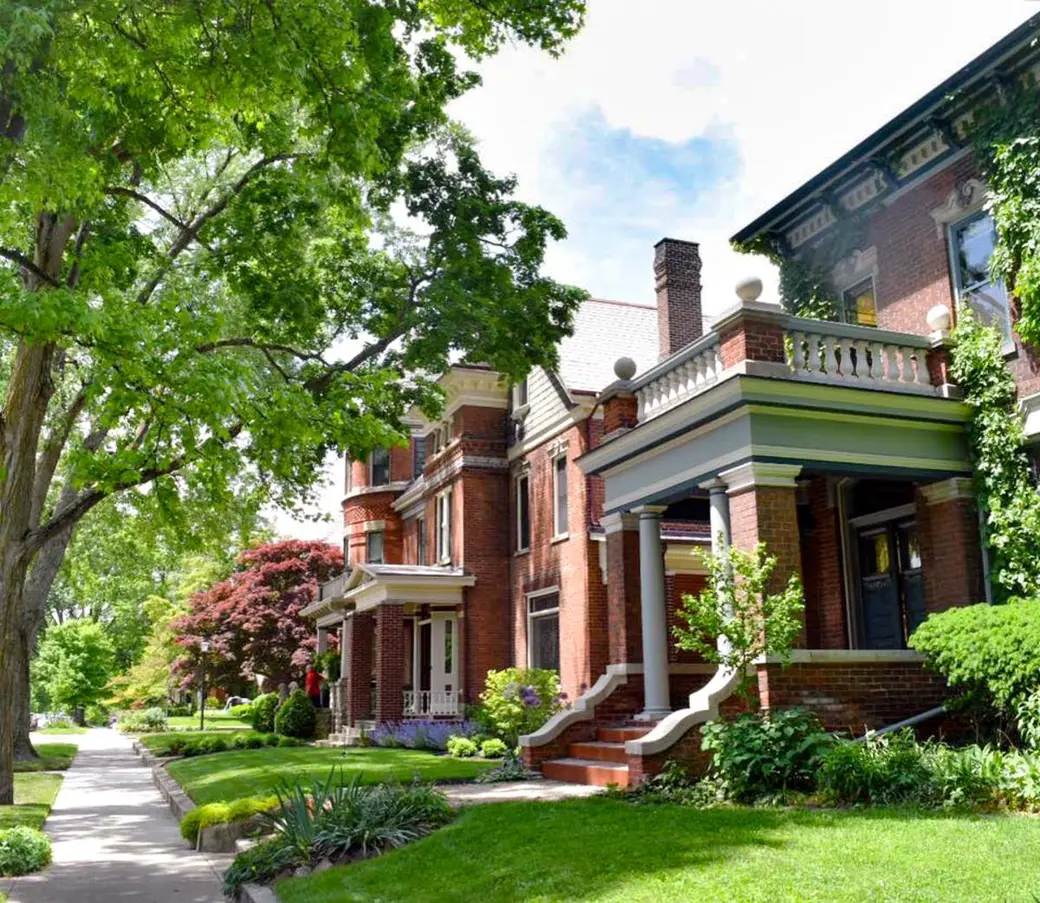
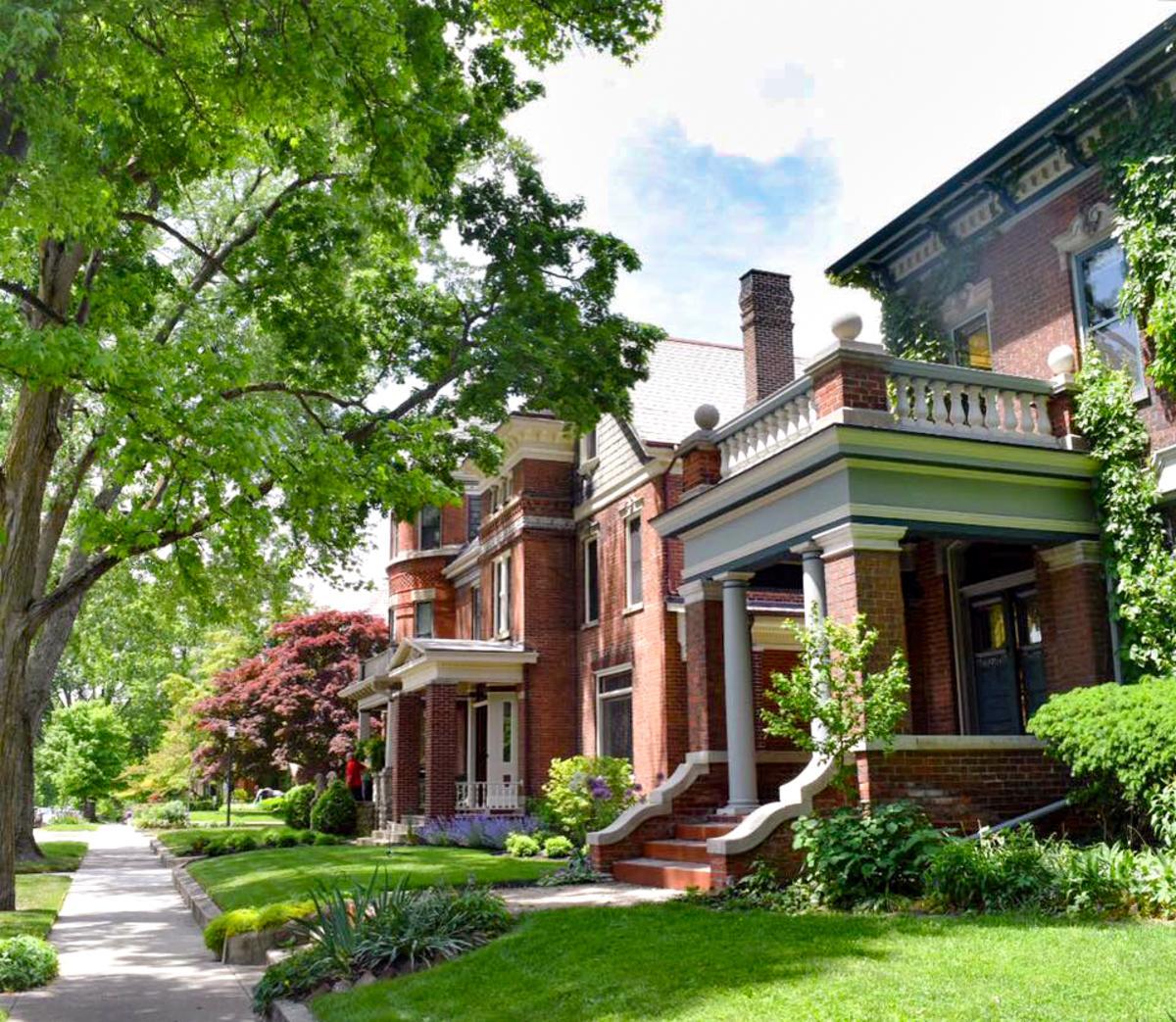
Historic homes, brick streets, mature trees, front porches, downtown within walking distance, Electric Works around the corner, and enough architectural variety that two houses on the same block may have almost nothing in common.
By Nate Hicks • Hicks Team Real Estate
What Is It Like to Live in West Central Fort Wayne?
West Central is one of Fort Wayne's oldest and most architecturally distinctive residential neighborhoods. It sits immediately west of downtown, with parts of the neighborhood close enough to walk to Parkview Field, the Allen County Public Library, the riverfront, restaurants, and other downtown destinations. The neighborhood developed beginning in the canal era of the 1830s and contains architecture representing styles that were popular from the nineteenth century well into the twentieth.
But the useful answer is simpler.
West Central feels like a neighborhood.
Not a subdivision.
The houses don't all match.
The streets don't all look the same.
The trees have been there longer than you have.
There are houses with elaborate masonry and houses that started life as workers' cottages.
There are porches you could actually spend an evening sitting on.
There are brick streets that look fantastic in photos and occasionally remind you that suspension components are replaceable.
And downtown is sitting right there.
For someone who wants the convenience of urban Fort Wayne but would rather own a house than an apartment twelve stories up, West Central is one of the first places I'd look.
What Do We Mean by West Central?
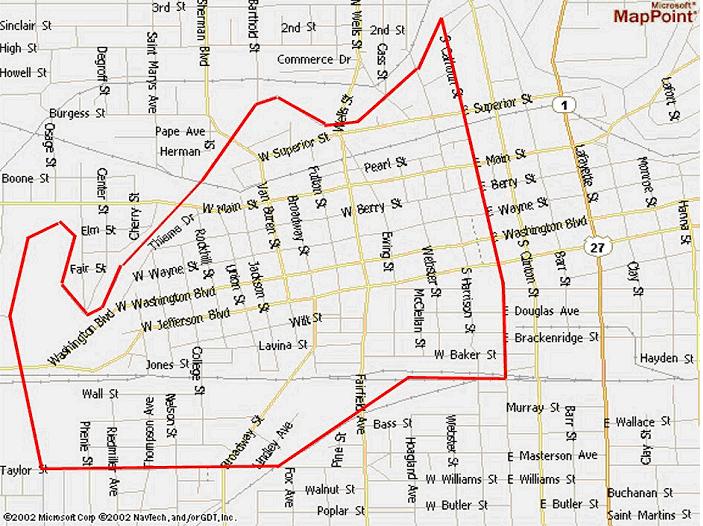
This deserves some clarification because there are several overlapping definitions.
The West Central Neighborhood Association boundary is larger than the West Central Historic District, and not every property associated with West Central is subject to the same historic-preservation rules.
The historic residential heart sits directly west of downtown.
That's the part most people picture when they hear West Central.
Historic homes.
Tree-lined streets.
Brick pavement.
Broadway.
Wayne.
Washington.
Berry.
Rockhill.
And the blocks connecting downtown toward Swinney Park and Electric Works.
For a buyer, the important thing isn't memorizing a boundary map. It's knowing which designation applies to the specific property you're considering. We'll come back to that because it matters.
West Central Fort Wayne at a Glance
City: Fort Wayne
County: Allen County
Setting: Immediately west of Downtown Fort Wayne
Housing: Historic single-family homes, duplexes and other multifamily properties, apartments, converted buildings, and some newer infill
Architecture: Greek Revival, Gothic Revival, Italianate, Queen Anne, Richardsonian Romanesque, Colonial Revival, Craftsman, workers' cottages, and other styles
Historic Status: Portions are listed on the National Register of Historic Places and portions are a Fort Wayne Local Historic District
Nearby Destinations: Downtown Fort Wayne, Electric Works, Broadway Arts District, Parkview Field, riverfront, and Allen County Public Library
Major Park: Swinney Park
Local Character: Historic, walkable, architecturally varied, arts-oriented, and distinctly urban
School Corporation: Fort Wayne Community Schools, with exact assignments determined by address
Biggest Buyer Considerations: Historic-district rules, old-home condition, parking, renovation history, utilities, masonry, windows, roofs, foundations, and the difference between a beautiful old house and an expensive old project
West Central Started as a Walking Neighborhood
There's a reason West Central works so well with downtown today.
It was built that way.
The neighborhood began developing during Fort Wayne's canal era in the 1830s. Early residents were largely working-class people who lived close enough to walk to their jobs. As Fort Wayne grew, improved transportation made the area attractive to wealthier residents too, and larger fashionable houses began replacing some of the smaller homes.
So when people talk about modern ideas like walkability and mixed urban neighborhoods, West Central has a bit of an advantage. It was doing that before anybody had a Walk Score.
The Architecture Is the Main Event
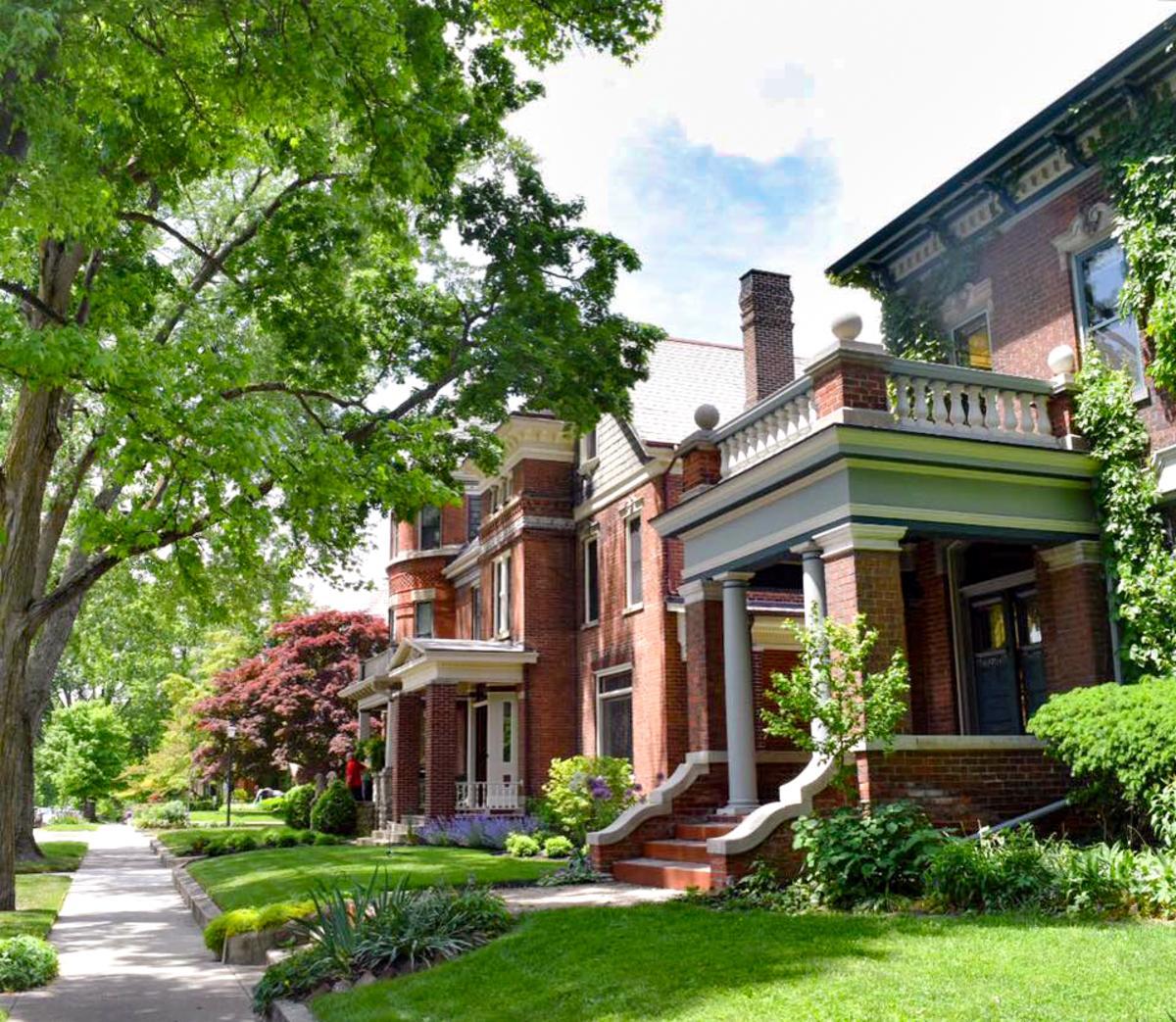
You don't need to know the difference between Italianate and Richardsonian Romanesque to notice that West Central looks different.
But if you do care about architecture, you can lose an entire afternoon here.
West Central contains examples of nearly every major architectural style represented locally between roughly 1840 and 1960. The neighborhood includes early Greek Revival homes, Gothic Revival, Italianate, Queen Anne, Richardsonian Romanesque, Colonial Revival, Craftsman homes, workers' cottages, churches, and historic commercial buildings.
West Central also contains a significant collection of buildings associated with Fort Wayne architects John F. Wing and Marshall Mahurin.
You may see a house with a turret.
Then a narrow cottage.
Then a massive brick home.
Then something with a porch large enough to qualify as another room.
The lack of uniformity is the point.
Some of the Smaller Homes Are Just as Important as the Mansions
The big historic homes get photographed.
Understandably.
But I wouldn't reduce West Central to grand houses.
The neighborhood also includes smaller workers' cottages, many along narrower tree-lined brick streets.
That's an important part of the neighborhood's real estate story.
There are substantial historic residences.
There are more modest homes.
There are multifamily properties.
There are apartments.
There are buildings that have been converted one direction and then converted back again.
The housing history here is layered.
West Central and Downtown Fit Together Naturally
This is probably West Central's biggest lifestyle advantage.
You can have a front porch and a yard without moving very far from Downtown Fort Wayne.
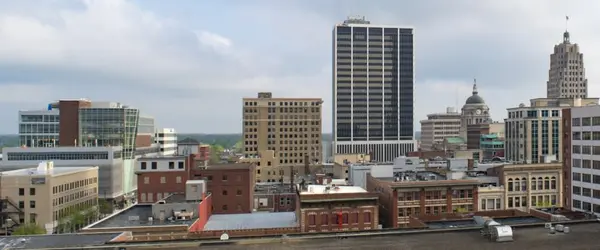
Parts of West Central are within a relatively short walk of Parkview Field, the Allen County Public Library's Main Library, and the downtown riverfront around Promenade Park and The Landing.
That doesn't mean every house in West Central is a ten-minute walk from everything.
The neighborhood is bigger than that.
But you're close.
Really close. For someone who likes downtown but doesn't necessarily want downtown apartment living, that's the appeal.
You Can Get Much of the Downtown Lifestyle Without Living in a Downtown Building
This is the distinction we talked about in the Downtown Fort Wayne guide.
Downtown says:
Apartment.
Condo.
Elevator.
Parking garage.
Shared walls.
West Central says:
House.
Porch.
Yard.
Detached garage, maybe.
Basement, probably.
A century of previous owners making decisions you're about to investigate.
And downtown a few blocks away.
Neither one is better.
They're different answers to the same basic question:
How close do you want to be to the center of the city?
Electric Works Has Made the Location Even More Interesting
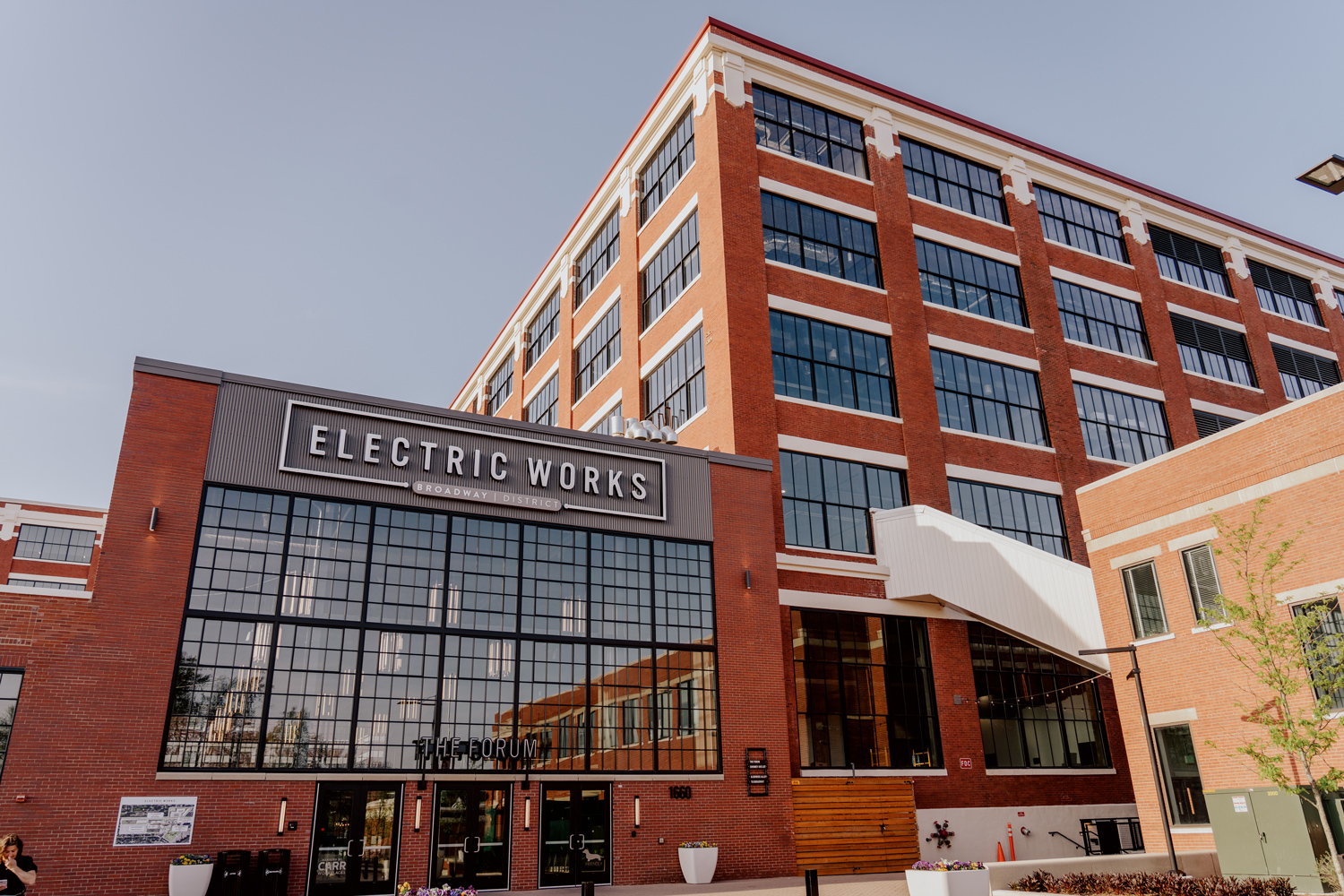
West Central doesn't just sit next to traditional downtown.
It also connects naturally toward Broadway and Electric Works.
The Broadway corridor includes galleries, shops, music, restaurants, creative businesses, and the historic Electric Works campus.
That gives West Central activity on more than one side.
Downtown is east.
Electric Works and the Broadway corridor are south and southeast.
Swinney Park anchors the western side.
That's a pretty useful position.
Broadway Gives West Central Some Personality of Its Own
Broadway isn't just the road you take to Electric Works.
The corridor has galleries, independent businesses, restaurants, music, and some places that don't feel manufactured for a lifestyle brochure.
That's a compliment.
Davey's Delicious Bagels operates on Broadway and has become one of the corridor's local breakfast and coffee stops.
A little farther south, The Brass Rail remains a longtime Fort Wayne live-music venue.
And nearby businesses, art spaces, and Electric Works give the corridor a different feel from the conventional retail centers elsewhere in Fort Wayne.
You don't come to West Central because there's a Target around the corner. That's not really the assignment.
Arena Dinner Theatre Is Actually in the Neighborhood
One of West Central's more interesting local institutions is Arena Dinner Theatre on Rockhill Street.
It's exactly the kind of place that fits West Central.
Historic building.
Arts use.
Neighborhood scale.
And slightly hidden unless you know it's there.
That describes a surprising amount of this neighborhood.
Swinney Park Gives the Western Edge a Lot of Green Space
At the western side of the neighborhood is Swinney Park.
Swinney East and West together total about 94 acres and include trails, playgrounds, disc golf, fishing, sports facilities, and other recreation.
That gives West Central another nice contrast.
You can walk east toward downtown.
Or west toward a large park.
Not bad.
The Home & Garden Tour Tells You a Lot About the Neighborhood
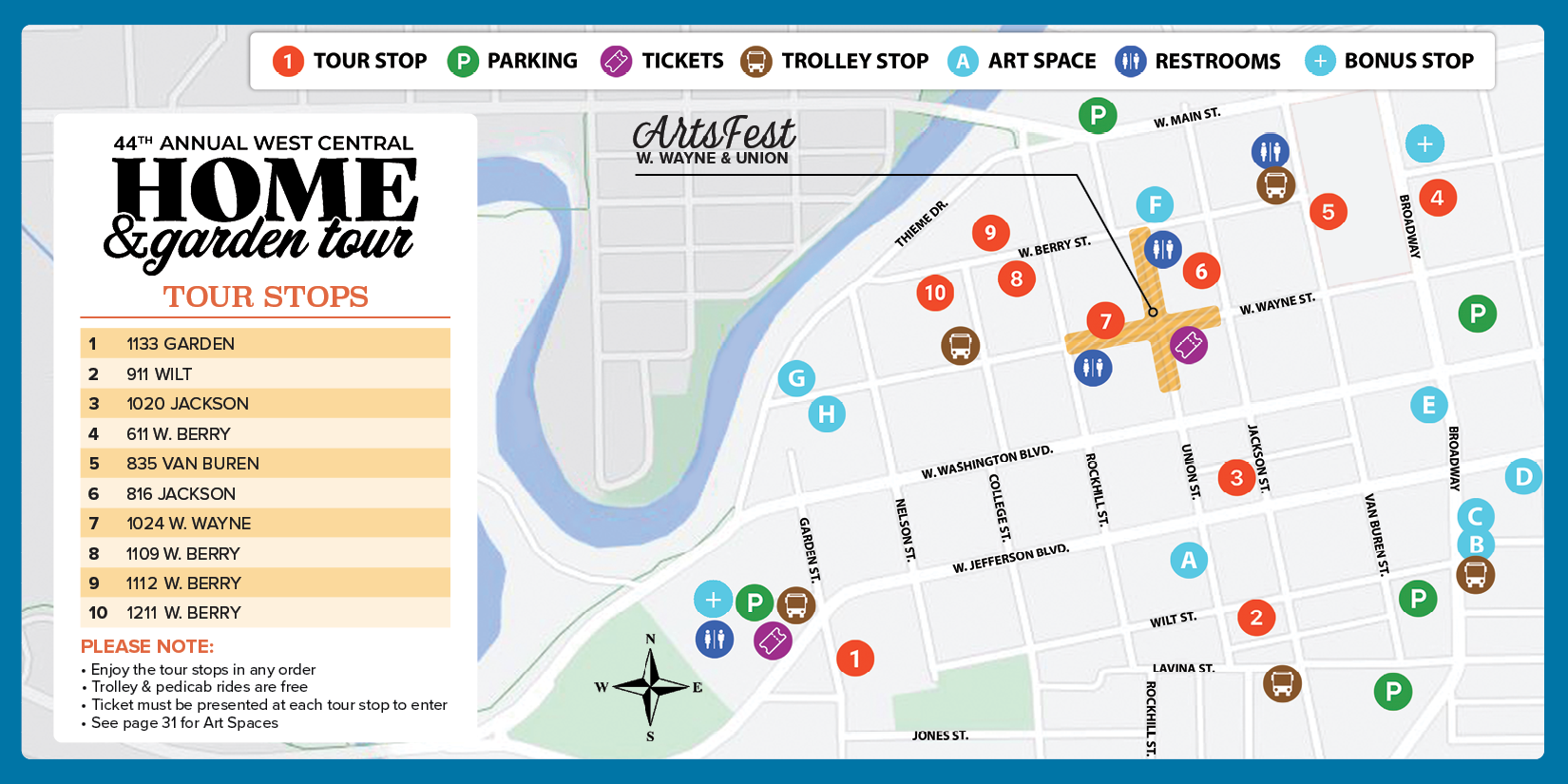
West Central's annual Home & Garden Tour isn't just a community event.
It's almost a thesis statement.
The West Central Neighborhood Association has been opening selected homes and gardens to visitors for decades, with ArtsFest adding art, vendors, food, and music to the neighborhood during the event.
Think about what that says.
People don't organize a home tour around houses nobody wants to look at.
West Central residents are proud of the architecture.
And they should be. The neighborhood itself is part of the attraction.
Historic District Does Not Mean Every House Has the Same Rules
This is probably the most important real-estate section in the entire guide.
There are multiple overlapping historic designations.
The West Central Neighborhood Association boundary is not the same thing as the National Register district.
And the National Register district is not exactly the same thing as the Fort Wayne Local Historic District.
That distinction matters.
A National Register designation recognizes historic significance.
A Local Historic District can directly affect exterior work on a privately owned property.
Fort Wayne's Historic Preservation Commission and preservation staff review proposed changes to locally designated properties when those changes affect areas subject to public view.
Before planning replacement windows, siding, masonry changes, porch alterations, additions, or other exterior renovations, confirm whether the property is locally designated and what approvals may be required. Do that before the contractor orders everything.
This Is Not an HOA
People sometimes hear "historic district" and mentally translate it into homeowners association.
That's not quite right.
The goal is historic preservation rather than subdivision uniformity.
Nobody is trying to make every house look identical.
That would be particularly ridiculous in West Central.
The point is protecting the architectural characteristics that make the neighborhood worth preserving in the first place.
Still, if you're someone who wants to buy an old house and completely redesign the exterior without anyone else being involved, you need to understand the rules before you buy. That's not a small detail.
Old Windows Are a Real Estate Conversation Here
West Central has some beautiful windows.
It also has old windows.
Sometimes both statements describe the same window.
Historic windows can contribute enormously to a home's character.
They can also bring questions about condition, glazing, weatherstripping, storm windows, energy efficiency, wood deterioration, hardware, repairability, and whether replacement would be allowed under applicable historic guidelines.
This is where "we'll just replace all the windows" may not be the first or best answer. We investigate before we assume.
The Same Goes for Masonry
Brick and stone are everywhere in West Central.
Again, beautiful.
Again, old.
You want to pay attention to mortar, previous repairs, water intrusion, chimneys, foundation masonry, painted versus unpainted brick, and whether somebody used the wrong material during a repair thirty years ago.
Historic masonry doesn't necessarily need to scare anybody.
Bad masonry work should. There's a difference.
Buying an Old House Requires a Different Inspection Mindset
A beautiful staircase is not a mechanical system.
Neither is a stained-glass window.
I love both.
I still want to know what is happening behind the walls.
Roof.
Foundation.
Masonry.
Sewer line.
Electrical service.
Old wiring.
Plumbing materials.
Boiler or furnace systems.
Air conditioning.
Windows.
Chimneys.
Fireplaces.
Insulation.
Basement moisture.
Drainage.
Tree roots.
Porches.
Detached garages.
Previous additions and renovations performed across several generations.
Sometimes you walk into an old house and the previous owners clearly loved it.
Sometimes you walk into an old house and somebody discovered a home-improvement television channel in 2004. Those are different inspections.
"Renovated" Can Mean Almost Anything
This matters in historic neighborhoods.
A listing may say renovated.
Great.
What was renovated?
Kitchen?
Bathrooms?
Electrical?
Plumbing?
Roof?
HVAC?
Sewer?
Foundation?
Or did we install gray flooring and paint every available surface?
Cosmetic renovation and infrastructure renovation are not the same thing. West Central has enough age that the distinction can become expensive.
Basements Deserve Attention
Older Fort Wayne homes frequently have basements, and West Central is no exception.
The useful question isn't simply whether there's a basement.
It's:
What kind?
How old is the foundation?
Any visible movement?
Moisture?
Previous waterproofing?
Sump system?
Drainage?
Finished space?
Evidence of repeated water intrusion?
A 120-year-old basement does not need to look like a brand-new poured-concrete basement. It does need to be understood.
Parking Is Property-Specific
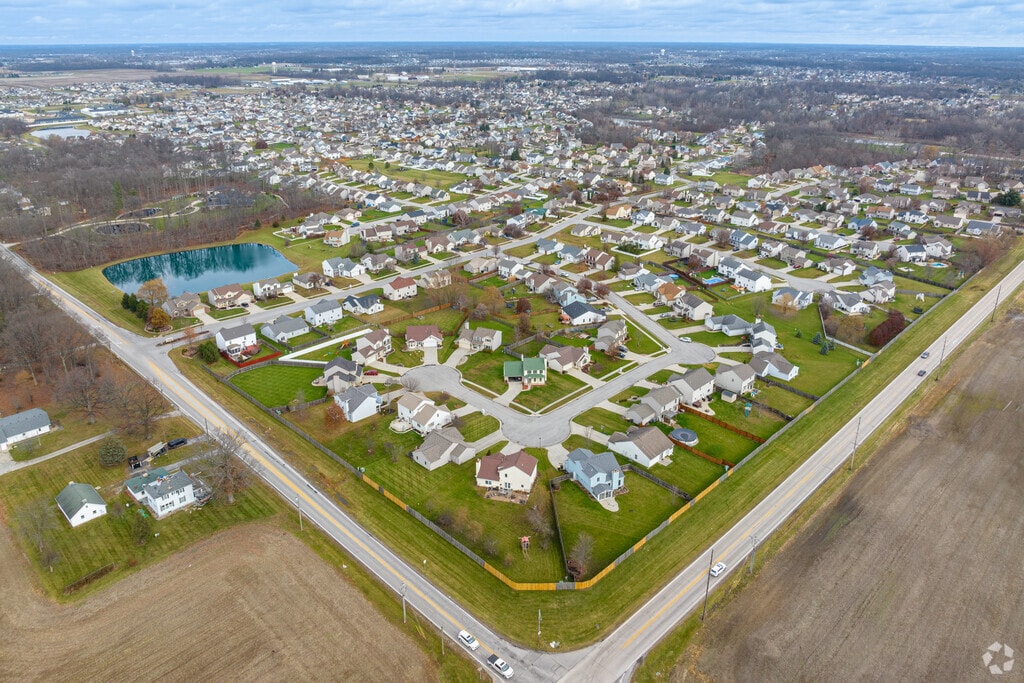
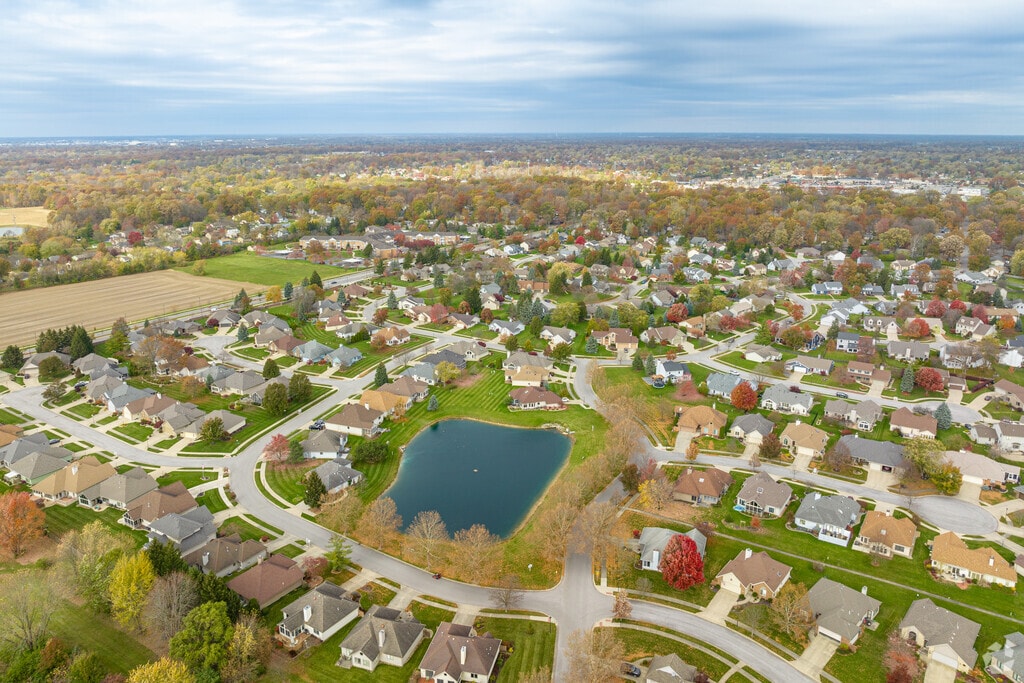
This is another major difference from newer Fort Wayne subdivisions.
Don't assume you're getting a two-car attached garage.
Some homes have detached garages.
Some have alley access.
Some have driveways.
Some rely more heavily on street parking.
Some historic garages are smaller than modern vehicles would prefer.
And if you own a truck that requires its own ZIP code, measure before getting emotionally attached to the garage.
Parking matters more here because the neighborhood was built before every household expected multiple large vehicles.
The Brick Streets Are Charming
They really are.
They photograph beautifully.
They contribute to the historic character.
They also have texture.
Let's call it texture.
If you've spent your entire life driving through brand-new subdivisions with perfectly smooth pavement, you will notice the difference.
I don't see that as a reason not to live here. It's part of the neighborhood.
Mature Trees Are Wonderful Until They Become a Property Issue
One of West Central's biggest visual strengths is its tree canopy.
Shade.
Character.
Scale.
Fall color.
But when we're evaluating an individual property, large old trees deserve the same practical questions as anything else.
Health.
Roots.
Branches.
Proximity to the roof.
Sewer line.
Sidewalk.
Foundation.
Maintenance.
The tree may have been there for 80 years. That doesn't mean it signed a maintenance agreement.
Walkability Is Real, but Block Matters
West Central is genuinely walkable by Fort Wayne standards.
That's one of its strongest advantages.
But a buyer should still ask:
Where in West Central?
Walking from one of the eastern residential blocks to downtown is different from starting farther west.
Walking to Electric Works is different from walking to Promenade Park.
And your personal definition of "walkable" may be three blocks or fifteen.
Park at the house you're considering. Walk downtown. Walk to Electric Works. Walk to coffee. Walk back. If that lifestyle is part of why you're buying the house, test the lifestyle before you buy it.
Living Near Downtown Means Downtown Sometimes Comes to You
This is the tradeoff.
Events.
Traffic.
Visitors.
Music.
Construction.
Street closures.
Festivals.
Baseball crowds closer to downtown.
Broadway activity closer to that corridor.
West Central usually feels much more residential than the downtown core.
But it isn't a subdivision eight miles away either.
That's the entire appeal.
And occasionally the inconvenience. If you want complete separation from city activity, this probably isn't the search. If you like being close enough to participate without living directly above it, West Central starts making a lot more sense.
Schools Should Be Verified by Address
West Central is within Fort Wayne Community Schools, but specific elementary, middle, and high-school assignments should always be checked for the actual property.
Same rule as everywhere else.
Don't assume based on the listing.
Don't assume based on the neighbor.
Check the address.
What Should Homebuyers Know About West Central Real Estate?
Start with the house.
Then ask what kind of historic designation applies to it.
Then dig deeper.
Age.
Architecture.
Historic status.
Exterior restrictions.
Previous renovations.
Roof.
Masonry.
Windows.
Electrical.
Plumbing.
Sewer.
Foundation.
HVAC.
Basement.
Drainage.
Garage.
Parking.
Trees.
Lot.
Multifamily history.
Current use.
Permits and what was actually updated.
This isn't the neighborhood where I want to hear:
"Everything looks pretty good."
Pretty is nice.
Documentation is better.
Is West Central Fort Wayne the Right Place for You?
West Central makes a lot of sense if you want something Fort Wayne's newer subdivisions simply cannot reproduce.
Historic architecture.
Mature trees.
Brick streets.
Porches.
Individuality.
Downtown access.
Electric Works.
Broadway.
Local businesses.
Swinney Park.
Arts.
Community events.
And houses with an actual story.
The tradeoff is that old houses require participation.
You may have more maintenance.
Renovations can be more complicated.
Historic-district requirements may apply.
Parking may be less convenient.
Floor plans may be quirky.
Walls may not be perfectly square.
You may discover things nobody has manufactured since Calvin Coolidge was president.
Some buyers hear that and get excited.
Others immediately open the new-construction listings.
Both are reasonable reactions.
The question isn't whether old homes are better than new ones. It's whether you want what comes with owning one.
Frequently Asked Questions About Living in West Central Fort Wayne
Is West Central part of Downtown Fort Wayne?
West Central sits immediately west of downtown and is closely connected to it, but it has its own residential identity. Downtown housing is dominated by apartments, condos, and mixed-use buildings, while West Central offers a much larger concentration of historic houses.
How old is the West Central neighborhood?
Residential development began during Fort Wayne's canal era in the 1830s, making West Central one of the city's oldest neighborhoods.
Is West Central a historic district?
Parts of West Central are listed on the National Register of Historic Places and parts are designated as a Fort Wayne Local Historic District. The neighborhood association boundary is larger than either historic designation.
Can I renovate a house in the West Central Historic District?
Yes, but if the property is within the Fort Wayne Local Historic District, certain exterior changes can be subject to Historic Preservation Commission design review. Buyers should confirm the property's designation and requirements before planning exterior work.
Does every West Central property have historic restrictions?
No. The West Central Neighborhood Association boundary, National Register district, and Local Historic District are not identical. Rules depend on the individual property's designation.
What architectural styles are found in West Central?
The neighborhood includes Greek Revival, Gothic Revival, Italianate, Queen Anne, Richardsonian Romanesque, Colonial Revival, Craftsman, workers' cottages, and other architectural styles spanning much of Fort Wayne's nineteenth- and early twentieth-century development.
Is West Central walkable to downtown?
Yes. Parts of the neighborhood are within a relatively short walk of Parkview Field, the Allen County Public Library, the riverfront, restaurants, and other Downtown Fort Wayne destinations. Exact walking time depends on the individual property.
Is Electric Works close to West Central?
Yes. The Broadway corridor connects West Central toward Electric Works, making the campus, Union Street Market, restaurants, and events convenient from much of the neighborhood.
What park is near West Central?
Swinney Park sits along the western side of the area. Swinney East and West together cover roughly 94 acres and include trails, recreation, playgrounds, disc golf, fishing, and other amenities.
Does West Central have local restaurants and entertainment?
Yes. Broadway and the surrounding area include local businesses such as Davey's Delicious Bagels, The Brass Rail, Arena Dinner Theatre, galleries, and other arts-oriented businesses, with Electric Works and downtown also nearby.
What is the West Central Home & Garden Tour?
It's an annual neighborhood event that opens selected historic homes and gardens to visitors, often alongside ArtsFest with art, food, vendors, and music.
What school district serves West Central?
West Central properties are within Fort Wayne Community Schools. Exact school assignments should be confirmed for the individual address.
Are there garages in West Central?
Many properties have garages or other off-street parking, but parking arrangements vary significantly because of the neighborhood's age. Buyers should evaluate the specific house, driveway, garage, alley access, and street-parking situation.
Are West Central homes expensive to maintain?
They can require more maintenance than newer construction, but condition varies dramatically by property. A well-restored historic home and an old house with decades of deferred maintenance are two very different purchases.
Thinking About Moving to West Central Fort Wayne?
Don't drive through once.
Walk it.
Start closer to downtown.
Walk Wayne.
Washington.
Berry.
Look at the houses.
Look at the smaller streets too.
Don't spend the whole time staring at the mansions.
Look at the cottages.
The duplexes.
The porches.
The alleys.
The garages.
The sidewalks.
Head toward Broadway.
Stop for coffee or breakfast.
Walk toward Electric Works.
Then come back through the neighborhood.
Head west toward Swinney Park.
Do it again in the evening.
If you're considering a specific house, park there.
Walk to the places you think you'll use.
Downtown.
Electric Works.
Dinner.
Coffee.
The park.
If you tell yourself one of the reasons you're buying the house is because you can walk everywhere, make sure you're actually willing to make the walk.
Then go back to the house.
And this time stop looking at the stained glass.
Look at the electrical panel.
Both matter. Only one is likely to ruin your Tuesday.
Buying a Home in West Central Fort Wayne
If you're searching for homes for sale in West Central, don't start by asking whether you like old houses.
That's too broad.
Ask what kind of old house you're willing to own.
Fully restored?
Partially renovated?
Mostly original?
Historic district?
Multifamily?
Single-family conversion?
Large home?
Smaller cottage?
Garage?
No garage?
Then evaluate the property itself.
Historic designation.
Exterior restrictions.
Renovation history.
Roof.
Foundation.
Masonry.
Windows.
Electrical.
Plumbing.
Sewer.
HVAC.
Basement.
Drainage.
Parking.
Garage.
Trees.
And permits.
West Central can offer houses you simply won't find in newer Fort Wayne neighborhoods.
That's the opportunity.
The inspection and research are how we make sure the opportunity doesn't become your new full-time hobby.
Selling a Home in West Central Fort Wayne
Selling in West Central is different too.
You aren't just selling square footage.
You're selling architecture.
Historic details.
Location.
Walkability.
Porches.
Mature trees.
Original millwork.
Updated systems.
Parking.
Proximity to downtown.
Proximity to Electric Works.
And, depending on the house, a piece of Fort Wayne history.
That means the comparable-sale conversation needs to be thoughtful.
The house three blocks away may be the same size and still be a terrible comp.
Different architecture.
Different condition.
Different historic designation.
Different parking.
Different updates.
Different block.
With unique homes, pricing gets more specific, not less.
Know someone considering West Central Fort Wayne?
Share this guide with them. Buying in West Central is as much about understanding the house, its history, and its block as it is about choosing the neighborhood.
Have Questions About West Central Fort Wayne Real Estate?
If you're thinking about buying, selling, or moving to West Central, I'm happy to help you work through the details.
West Central isn't for someone looking for a house that could be anywhere. That's kind of the point. It's old Fort Wayne sitting beside new Fort Wayne. Historic homes, downtown, Broadway, Electric Works, brick streets, Swinney Park, arts, local businesses, and enough personality that you can usually tell you're in West Central without seeing a sign. Sometimes finding the right house here starts with deciding how much character you're willing to maintain.
Contact Hicks Team Real EstateCategories
Recent Posts