Living in Auburn, Indiana | Moving to Auburn Guide
Community Spotlight
Living in Auburn, Indiana: What to Know Before You Move

Historic downtown, easy access to I-69, a strong connection to automotive history, everyday amenities close to home, and Fort Wayne just down the road.
By Nate Hicks • Hicks Team Real Estate
Quick Answer: What is it like to live in Auburn, Indiana?
Auburn is a small Northeast Indiana city and the county seat of DeKalb County. It combines a historic downtown, established and newer neighborhoods, local parks and trails, DeKalb Central schools, Parkview DeKalb Hospital, shopping and restaurants, and direct access to Interstate 69. Fort Wayne is roughly 19 miles south by road, making Auburn one of the smaller communities in the region that still maintains a fairly direct connection to the larger city.
That's the short answer.
Auburn gets more interesting once you spend a little time driving around it.
It has parts that feel very much like an older Indiana town, including the courthouse square, historic homes, mature neighborhoods, and buildings that have been part of the community for generations.
Then you head toward I-69 and things change.
There are newer commercial areas, hotels, restaurants, retail, residential development, and easy access to the interstate.
Keep going beyond the city and the scenery changes again. It doesn't take long before you're into the surrounding DeKalb County countryside.
That's one of the things that makes Auburn worth looking at if you're considering Northeast Indiana. You don't have to choose between living in a tiny town and living in Fort Wayne. Auburn sits somewhere in the middle.
Where Is Auburn, Indiana?
Auburn is located in DeKalb County in Northeast Indiana, directly along Interstate 69.
State Road 8 runs through the community, and the city has two I-69 exits. Fort Wayne is to the south, Garrett is just west, Waterloo is north, and Kendallville and Avilla are farther west. The Indiana-Michigan state line and the Indiana Toll Road are also north of Auburn.
That interstate access matters more than it may seem when you're comparing Auburn with other small cities in Northeast Indiana.
Auburn isn't simply near Fort Wayne.
It has a pretty straightforward connection to it.
That also makes it relatively easy to head north toward Angola, Michigan, and the Toll Road or south toward Fort Wayne and the rest of the I-69 corridor.
Auburn, Indiana at a Glance
County: DeKalb County
County Seat: Auburn
ZIP Code: 46706
2020 Census Population: 13,412
School Corporation: DeKalb County Central United School District
Healthcare: Parkview DeKalb Hospital
Major Roads: Interstate 69 and State Road 8
Distance to Fort Wayne: Roughly 19 miles by road
Known For: Auburn, Cord and Duesenberg automotive heritage
Major Parks: Eckhart Park, Rieke Park, Memorial Park, Smith Acres Park, and Thomas Park
What Does Living in Auburn Feel Like?
Auburn doesn't have one single personality.
That's probably the easiest way to explain it.
Around downtown, the city feels historic.
The DeKalb County Courthouse sits right in the middle of things, with businesses and older buildings surrounding the square. Residential streets begin fairly quickly beyond downtown, and you'll find plenty of older homes and mature trees.
Head farther out and Auburn starts to feel more suburban.
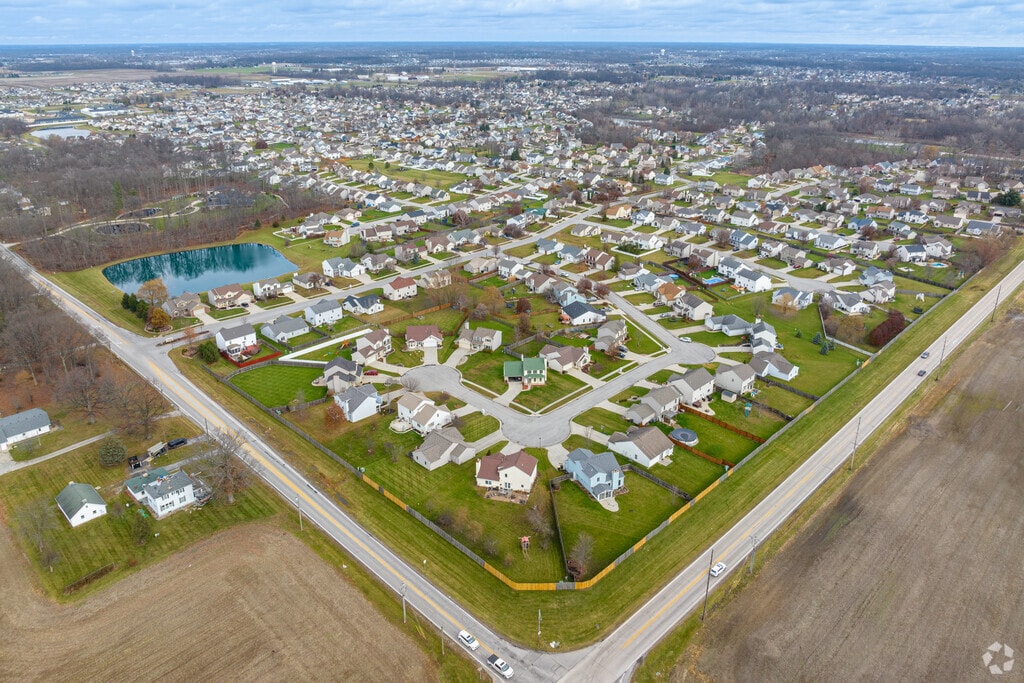
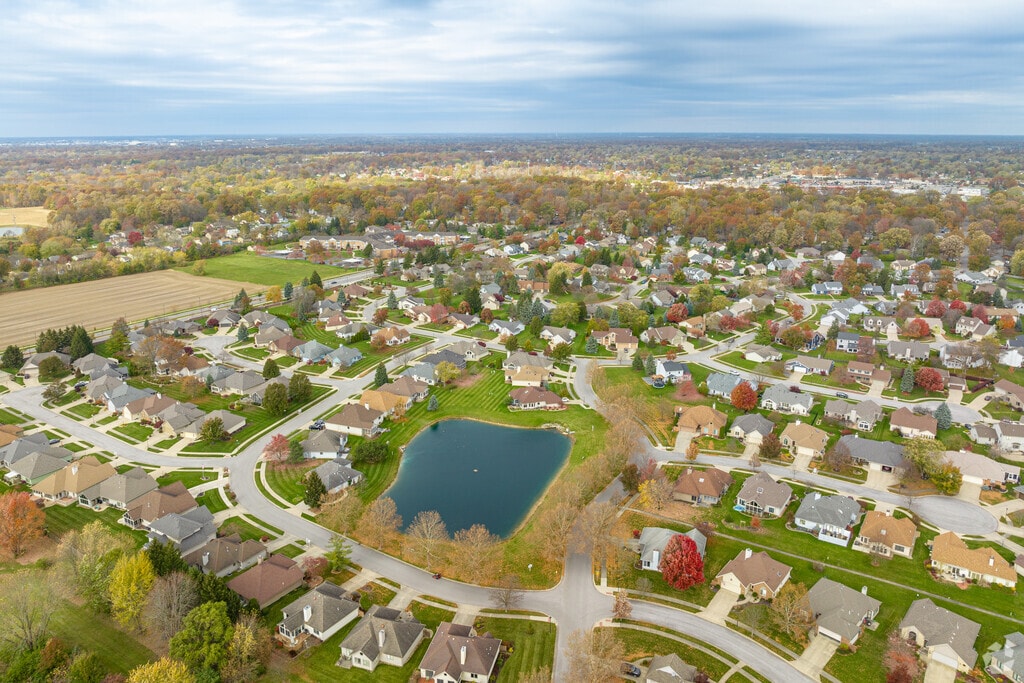
There are newer neighborhoods, ranch homes, commercial corridors, larger stores, and development near the interstate.
Then there are properties outside the city that carry an Auburn mailing address but feel decidedly rural.
When someone tells me they're considering moving to Auburn, my next question would be what they mean by Auburn. Do you want to be near downtown? In a subdivision? Closer to I-69? Or on a few acres outside town while keeping Auburn nearby for groceries and everyday errands? Those are all Auburn searches, but they aren't remotely the same lifestyle.
Downtown Auburn Has a Real Identity
Auburn's downtown is centered around the DeKalb County Courthouse.
It isn't a recreated main street or a newer development designed to look old. It's the traditional center of the community, and the surrounding buildings and neighborhoods grew around it.
Today, downtown still functions as a gathering point.
There are local businesses, restaurants, community events, the courthouse, public spaces, and seasonal activities that bring people into the center of town.
That becomes especially obvious during some of Auburn's larger events, when downtown streets turn into event space rather than simply a route through town. Downtown Auburn isn't just something you point out to visitors. People actually use it.
You Can't Really Talk About Auburn Without Talking About Cars
Auburn's connection to automotive history isn't some marketing theme somebody came up with last year.
It's part of the city's identity.
The Auburn Cord Duesenberg Automobile Museum preserves the legacy of Auburn, Cord, and Duesenberg automobiles, and Auburn's automotive attractions also include the National Auto & Truck Museum and other automotive museums in the area.
Even if you aren't a serious car person, you'll notice it.
Automotive imagery shows up around town. Classic cars are part of local events. The museums bring visitors into the area. And every year around Labor Day, that history becomes difficult to miss. That's one of the things Auburn has that is genuinely its own.
The Auburn Cord Duesenberg Festival
The Auburn Cord Duesenberg Festival is probably Auburn's signature event.
It takes place around Labor Day weekend and includes the downtown cruise-in, Parade of Classics, automobile displays, concerts, museum activities, car-related events, and other activities throughout the community.
This is one of those local events that changes the city while it's happening.
Downtown becomes packed with cars.
Streets close.
People come in from out of town.
The museums get busy.
And vehicles that you normally only see behind ropes or in magazines can suddenly be sitting along Main Street. Even if classic cars aren't your thing, it's hard not to appreciate how closely the event is tied to Auburn itself.
Auburn Has More Than One Major Community Event
The automotive festival gets plenty of attention, but it isn't the only major event that takes over parts of Auburn.
The DeKalb County Free Fall Fair is another long-running annual tradition centered around downtown Auburn and the DeKalb County Fairgrounds.
Between the fair, automotive events, downtown cruise-ins, holiday activities, and other local events, Auburn's downtown sees a lot more activity during the year than you might expect from a city of its size. That doesn't determine whether a house is right for you, but it absolutely contributes to what living in the community feels like.
Parks and Outdoor Recreation in Auburn
Auburn has a fairly extensive park system.
The city identifies five community parks, including Eckhart Park, Memorial Park, Rieke Park, Smith Acres Park, and Thomas Park, along with neighborhood parks, special-use parks, trails, and other recreational facilities.
Eckhart Park is one of Auburn's older and more recognizable parks. It includes playground space, picnic areas, shelters, sand volleyball, disc golf, a nature trail, and other amenities.
Rieke Park is another major piece of the city's park system, with ball diamonds, a fishing pond, pavilions, a playground, paved paths, walking trails, and Rieke Park Lodge.
Auburn's Trail System Is Easy to Overlook
One of the things people may not realize about Auburn is how much work has gone into connecting parts of the city with trails.
The Rieke Park Trail follows the footprint of a historic railroad and connects with additional trail infrastructure toward Waterloo.
The Pufferbelly Trail runs from the area of the Auburn Cord Duesenberg Automobile Museum toward downtown and connects with the Rieke Trail system.
That makes the trail network useful for more than recreation. It starts connecting actual destinations, including downtown, parks, and the museum area.
What Types of Homes Are in Auburn, Indiana?
Auburn's housing stock is pretty diverse.
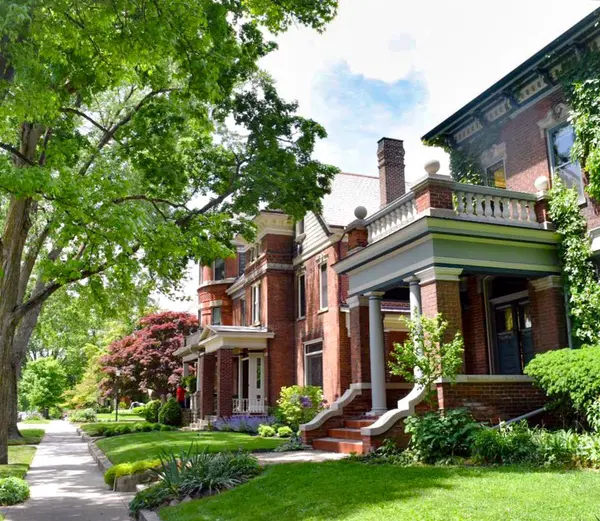
Near downtown and in some of the older neighborhoods, you'll find homes built many decades ago.
Depending on the street, that can mean older two-story homes, porches, mature trees, detached garages, traditional neighborhood layouts, and architectural details that newer subdivisions generally don't replicate.
There are also plenty of mid-century homes and ranches throughout Auburn.
Move into newer areas and you'll find more recent subdivisions and contemporary construction.
Then go outside the city limits and you're quickly into a different category entirely. That's where you may start seeing larger lots, acreage, pole barns, wells, septic systems, propane, agricultural surroundings, and the other things that come with rural property.
Buying an Older Home in Auburn
If you like older homes, Auburn gives you some interesting possibilities.
But this is where you have to separate character from condition.
A house may have original woodwork, a great porch, built-ins, tall ceilings, and a floor plan you love.
I still want to know about the roof.
And the electrical.
And the plumbing.
And the foundation.
And the sewer line.
And what somebody did during that kitchen remodel twenty years ago.
Older doesn't automatically mean problematic, and newer doesn't automatically mean trouble-free. The point is to understand the house you're buying instead of making assumptions based on its age.
What About Newer Homes in Auburn?
Newer construction changes the questions.
You may be less concerned about 80-year-old wiring and more concerned about lot size, subdivision restrictions, HOA requirements if applicable, drainage, builder warranties, future phases of development, and what is planned for the vacant land nearby.
That's especially important in areas where development is still happening.
A field behind the house during your showing doesn't necessarily mean there will always be a field behind the house. If the view or surrounding land matters to you, it's worth doing some homework before you buy.
Is Auburn a Good Option If You Work in Fort Wayne?
For many people, this is one of Auburn's strongest practical advantages.
Auburn is roughly 19 miles from Fort Wayne by road, and Interstate 69 provides a direct connection between the two cities.
Of course, "Fort Wayne" covers a lot of ground.
If you're working near Parkview Regional Medical Center or another north-side employer, Auburn can feel considerably closer than it would for someone driving all the way to southwest Fort Wayne.
Your exact commute matters.
So does the time of day.
And winter weather matters too.
The best thing you can do is drive the commute yourself before buying. Make the trip when you'd normally leave for work, then come back when you'd normally head home. Don't base one of your biggest housing decisions on what the route looks like at 11:00 on Sunday morning.
Auburn's Interstate Access Is a Meaningful Difference
Auburn's relationship with I-69 sets it apart from several nearby communities.
The interstate runs along the west side of the city, with two exits providing access to Auburn. State Road 8 also runs directly through the community.
That means someone commuting to Fort Wayne can get onto I-69 without first spending twenty minutes winding through county roads.
It also makes trips north toward Angola and Michigan pretty straightforward. If your life regularly takes you up and down the I-69 corridor, this is something I'd consider when comparing Auburn with Kendallville, Avilla, or other nearby communities.
What Schools Serve Auburn, Indiana?
Auburn is primarily served by DeKalb County Central United School District.
James R. Watson Elementary and McKenney-Harrison Elementary are located within Auburn. DeKalb Middle School and DeKalb High School are located nearby and are part of the same district.
As with any real estate search, don't assume the school listed online for a particular property is correct. School boundaries, enrollment procedures, and transfer policies can change. If a specific school matters to your decision, verify the address directly with the school district before you buy.
Healthcare in Auburn
Auburn has another advantage that not every smaller Northeast Indiana community has.
There's a hospital in town.
Parkview DeKalb Hospital is located on East Seventh Street and provides emergency care along with inpatient care, surgery, orthopedics, primary care, diagnostic services, and numerous other medical specialties and services.
You'll still find significantly more specialized healthcare options in Fort Wayne, but there is a big difference between occasionally driving to Fort Wayne for specialized care and needing to leave town for every medical need.
Shopping, Restaurants, and Everyday Errands
Auburn has enough commercial development that most routine errands can be handled locally.
Groceries, pharmacies, restaurants, hardware, banking, professional services, vehicle service, and many other everyday needs are available in town.
The I-69 and State Road 8 corridors also give Auburn more commercial activity than you'll find in some of the smaller communities around it.
Fort Wayne is obviously going to offer more choices. That's not really a fair comparison. The more useful question is how often you'll actually need to go there. For many routine things, the answer is probably not very often.
What Is Nearby If You Live in Auburn?
Auburn sits in a useful part of Northeast Indiana.
Garrett is only a short drive west.
Waterloo is directly north.
Avilla and Kendallville are to the west.
Angola and Steuben County are farther north along I-69.
Fort Wayne is south.
Ohio is east across rural DeKalb County.
Auburn vs. Garrett
Auburn and Garrett are close enough that buyers sometimes consider both during the same home search.
But they're different communities.
Garrett is smaller and has a more compact small-town feel.
Auburn is larger, has more commercial development, direct interstate access, a hospital, the county courthouse, and a broader range of everyday services. That doesn't make Auburn automatically better. Someone may prefer Garrett's scale or find the right home there.
Auburn vs. Kendallville
This is another comparison that makes sense.
Auburn and Kendallville are both regional centers for their respective counties.
Both have historic downtowns, hospitals, shopping, restaurants, schools, established neighborhoods, and access to surrounding rural areas.
The biggest practical difference may be location.
Auburn sits directly on I-69 and has a more direct interstate connection to Fort Wayne.
Kendallville sits farther west and has Bixler Lake and a different connection to Noble County's lake communities. They're close enough to compare and different enough that I would absolutely spend time in both before deciding.
Auburn vs. Huntertown
Auburn and Huntertown may both come up for someone who wants to live north of Fort Wayne.
But they feel very different.
Huntertown is much more closely tied to Fort Wayne's northern growth and newer residential development.
Auburn is a standalone city with its own downtown, courthouse, commercial base, hospital, school system, history, and community identity. Auburn is farther from Fort Wayne, but it also functions more independently from it.
Auburn vs. Fort Wayne
This comparison is mostly about scale.
Fort Wayne has significantly more employment, shopping, restaurants, entertainment, healthcare specialties, and housing options.
Auburn isn't trying to compete with that.
The tradeoff is living in a much smaller city while keeping Fort Wayne roughly 19 miles away. For someone who doesn't need everything a larger city offers every single day, that can work pretty well.
What Should Homebuyers Know About Auburn Real Estate?
The first thing I'd tell a buyer is not to treat 46706 as one housing market.
A downtown historic home, a newer subdivision property, and a five-acre home outside the city may all have Auburn addresses.
That doesn't mean they're comparable.
Lot size matters.
Age matters.
Condition matters.
Utilities matter.
Location matters.
Garage and outbuilding space can matter.
Once you're looking outside town, questions about wells, septic systems, propane, surveys, easements, drainage, zoning, agricultural land, and outbuildings may become part of the purchase. Those aren't problems. They're simply parts of the property you need to understand.
Is Auburn, Indiana a Good Place to Live?
Auburn can make a lot of sense for someone who wants a smaller Northeast Indiana city but doesn't want to give up everyday conveniences.
There's a traditional downtown.
There's direct I-69 access.
There's a local hospital.
There are parks and trails.
There are schools.
There are stores and restaurants.
There's a genuine community identity tied to automotive history.
And Fort Wayne is close enough that you can use what it offers without necessarily living there.
That doesn't mean Auburn is for everyone.
Some people want a bigger city. Some people want something much smaller. Some people want to live where their closest neighbor is half a mile away.
Auburn sits somewhere between those extremes. The real question isn't whether Auburn is a good place to live. It's whether Auburn fits how you want to live.
Frequently Asked Questions About Living in Auburn, Indiana
How big is Auburn, Indiana?
Auburn had 13,412 residents in the 2020 U.S. Census, making it one of the larger small cities in Northeast Indiana.
What county is Auburn, Indiana in?
Auburn is located in DeKalb County and serves as the county seat.
How far is Auburn from Fort Wayne?
Auburn is roughly 19 miles from Fort Wayne by road. Interstate 69 provides a direct north-south connection between the two cities.
What school district serves Auburn?
Auburn is primarily served by DeKalb County Central United School District. James R. Watson Elementary and McKenney-Harrison Elementary are located in Auburn, with DeKalb Middle School and DeKalb High School nearby.
Does Auburn have a hospital?
Yes. Parkview DeKalb Hospital is located in Auburn and provides emergency care, inpatient services, surgery, orthopedics, primary care, diagnostic services, and other medical care.
Is Auburn close to Interstate 69?
Yes. Interstate 69 runs along the west side of Auburn, and the city has two interstate exits. State Road 8 also runs directly through Auburn.
What parks are in Auburn?
Auburn's park system includes Eckhart Park, Rieke Park, Memorial Park, Smith Acres Park, Thomas Park, several neighborhood parks, specialty recreation areas, and a network of trails.
Does Auburn have walking and biking trails?
Yes. Auburn has several trails, including the Rieke Park Trail and Pufferbelly Trail. The trail system helps connect downtown, parks, and the museum area.
Why is Auburn, Indiana known for cars?
Auburn was historically connected to Auburn, Cord, and Duesenberg automobiles. That heritage is preserved through local museums, automotive events, and the annual Auburn Cord Duesenberg Festival.
When is the Auburn Cord Duesenberg Festival?
The Auburn Cord Duesenberg Festival centers around Labor Day weekend each year, with events taking place throughout the community.
What types of homes are available in Auburn?
Auburn's housing ranges from older homes near downtown and established neighborhoods to ranch homes, newer subdivisions, larger lots, and rural properties with acreage outside the city.
Is Auburn close enough to commute to Fort Wayne?
For many people, yes. Auburn is roughly 19 road miles from Fort Wayne and sits directly on the I-69 corridor. The practicality of the commute depends on your exact destination, schedule, traffic, and weather.
What is Auburn, Indiana's ZIP code?
Auburn's primary ZIP code is 46706.
Thinking About Moving to Auburn, Indiana?
If Auburn is on your list, spend some time here before deciding.
And I don't mean driving directly to a showing, walking through the house, and heading home.
Drive around downtown.
Go past the courthouse.
Head south toward the Auburn Cord Duesenberg Automobile Museum and Eckhart Park.
Drive toward I-69 and see how that side of Auburn feels.
Head north through some of the residential areas.
Then drive a few minutes outside town and see how quickly everything changes.
If you're going to commute, make the drive. Figure out where you'd shop. See where the schools are. Look at the neighborhoods at a normal time of day.
A community can look completely different when you're imagining an ordinary Wednesday instead of a Saturday afternoon house showing. That's when you start figuring out whether it actually fits.
Buying a Home in Auburn, Indiana
If you're looking at homes for sale in Auburn, there are enough different types of properties here that I'd avoid narrowing the search too quickly.
A home closer to downtown may offer something completely different from a newer property closer to I-69.
And both are going to be different from a property on acreage outside the city.
We'll want to look beyond bedrooms, bathrooms, and square footage. Age, condition, lot, utilities, location, updates, future development, comparable sales, and the surrounding area can all affect whether a house makes sense. The goal isn't just finding an Auburn address. It's finding the right property within Auburn.
Selling a Home in Auburn, Indiana
The same differences matter when you're selling.
A comparable sale on the opposite side of Auburn isn't automatically a good comparable just because the square footage is similar.
Older neighborhoods, newer subdivisions, rural properties, larger lots, and different locations around town can attract different buyers and behave differently in the market.
Pricing starts with understanding the actual property. From there, we can look at what buyers are comparing it against, what has recently sold, what is currently competing for attention, and which features genuinely separate your home from the others.
Know someone considering Auburn?
Share this guide with them. Understanding the community is just as important as understanding the house.
Have Questions About Auburn Real Estate?
If you're thinking about buying, selling, or moving to Auburn, I'm happy to help you sort through it.
And if you're comparing Auburn with Garrett, Kendallville, Avilla, Huntertown, Fort Wayne, or another Northeast Indiana community, that's worth talking through too. Sometimes choosing the right house starts with choosing the right place to look.
Contact Hicks Team Real EstateCategories
Recent Posts